
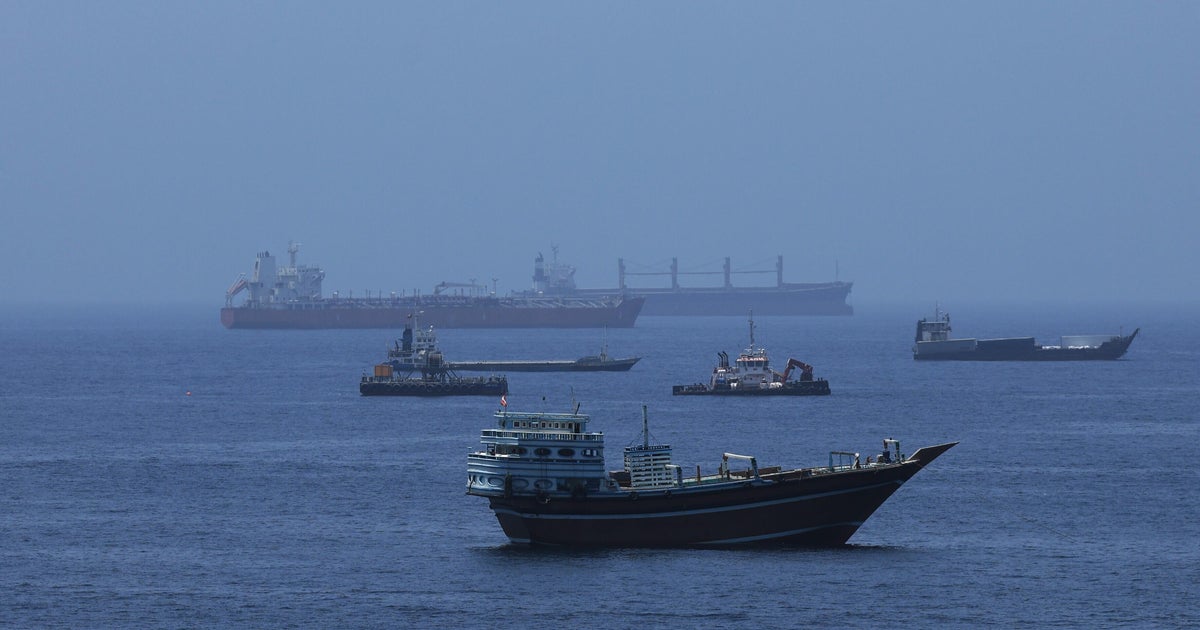
Brent crude fell 3.8% to $73.87 a barrel Thursday as tanker traffic through the Strait of Hormuz rose, with 70 ships transiting Thursday, a 105% day-on-day increase.
U.S. crude prices fell 3.9% to $70.34 a barrel, and early Thursday Brent was down 1.3% at $72.90 while the U.S. benchmark lost 1.4% to $69.37.
Chevron's Chief Financial Officer Eimear Bonner told CNBC's "Squawk Box" Europe show on Thursday, "it's going to take time" for the prices Americans pay at the pump to fall, even as global oil prices drop sharply with tankers starting to move in greater numbers through the Strait of Hormuz.
Mr. Trump has criticized big energy firms and accused them of "gouging" American drivers by not cutting their prices, telling White House reporters Wednesday that he had ordered an investigation into the matter as "gasoline prices should be much lower at the pump," and he singled out Chevron, ExxonMobil, Shell and BP by name.
Maritime business intelligence firm Kpler said ships were increasingly using a southern route through the strait that hugs Oman's coastline, and Iran's Islamic Revolutionary Guard Corps insisted Thursday that the only authorized route through the waterway is the one designated by Tehran and advised ships against using other routes.
A United Nations maritime agency promoted a route along the coast of Oman that dozens of tankers used to transit the strait.
"There's been a material shift this week as tanker movements in the Middle Eastern Gulf have risen sharply since Iran and the U.S. agreed to reopen the strait," Richard Mead, the editor-in-chief of Lloyd's List, said, adding that shipping firms were operating in a "limbo period" because it remains unclear what circumstances in the Strait of Hormuz will be after the U.S.-Iran negotiations conclude.
Iran and Oman have said they're creating a new joint mechanism to control maritime traffic through the strait, which could have "costs associated," and the Trump administration has said repeatedly that Iran will not be permitted under a final peace deal to charge ships fees or tolls.
Secretary of State Marco Rubio warned that allowing Iranian tolls on ships passing the Strait of Hormuz would create a precedent to other waterways, risking "total chaos." He said, "International waterways do not belong to any nation state. This is a foundational principle in the world today, without which the world would be in total chaos," and added, "While we want a deal, we don't want a deal at any price. We want a deal that's good, we want a deal that's real, we want a deal that's verifiable, and we want a deal that's adhered to."
The Senate late Wednesday rejected a measure aimed at restricting President Trump's power to wage war against Iran when a procedural motion failed in a 50 to 47 vote, a result the article described as a victory for the president and Senate GOP leadership; two Republicans, Sens. Susan Collins and Lisa Murkowski, voted in favor of advancing the resolution by Democratic Sen. Tim Kaine, Republican Sen. Rand Paul voted present, and Democratic Sen. John Fetterman voted no.
The Israeli military said Thursday that a soldier, Master Sergeant Basil Sweid, 32, was killed the previous day in southern Lebanon when his vehicle overturned, and the military said 37 soldiers and one civilian contractor have been killed in southern Lebanon since fighting with Hezbollah erupted in early March.