
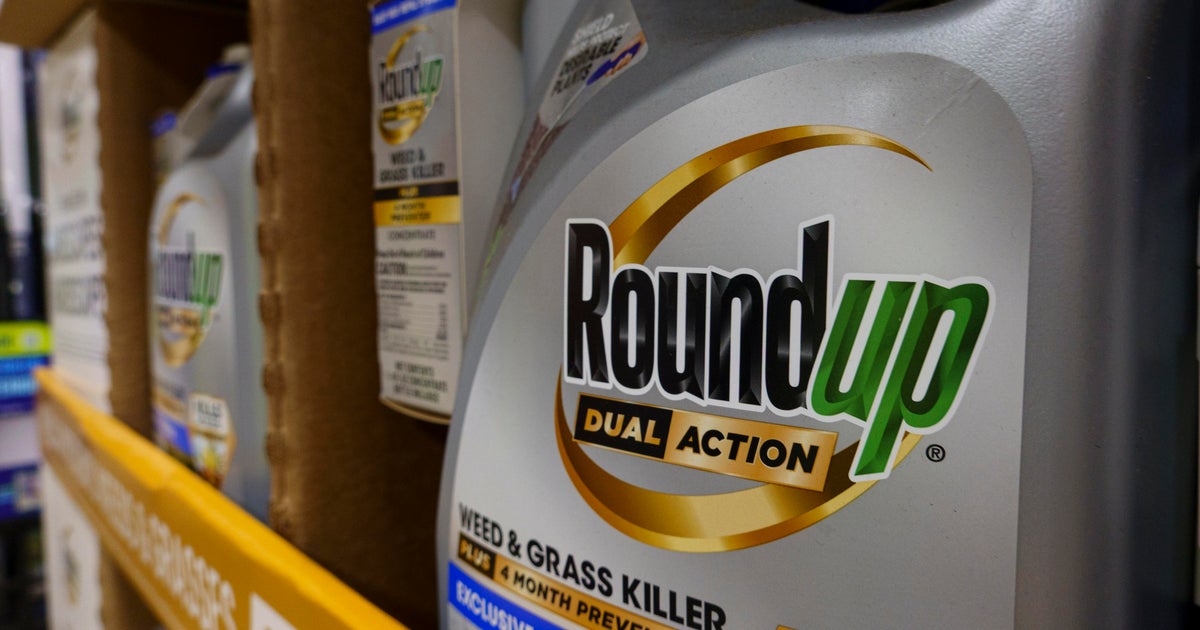
The Supreme Court on Thursday ruled seven-to-two in Monsanto Co. v. Durnell that a federal pesticide law bars state failure-to-warn lawsuits over Roundup's alleged cancer risks.
Justice Brett Kavanaugh wrote the majority opinion, which was joined by Chief Justice John Roberts and Justices Samuel Alito, Sonia Sotomayor, Elena Kagan, Amy Coney Barrett and Clarence Thomas; Justices Ketanji Brown Jackson and Neil Gorsuch dissented.
"As demonstrated by that comprehensive regulatory regime, EPA possesses a variety of tools to learn of and address new safety information," Kavanaugh wrote. "And as a matter of law, state tort law may not impose labeling requirements 'in addition to' or 'different from' federal requirements imposed under FIFRA." The Environmental Protection Agency has deemed Roundup safe to use and does not require a cancer warning on its label, and federal law requires pesticide makers to use an EPA-approved label unless the EPA approves a different label.
The case was brought in 2019 by John Durnell, a gardener from Missouri who said he had been exposed to Roundup for more than 20 years and developed non-Hodgkin's lymphoma; a jury in 2023 awarded him $1.25 million on a failure-to-warn claim.
The ruling is expected to block thousands of lawsuits over Roundup, Bayer said the decision is "good for science, farmers, and industries that depend on regulatory clarity for innovation," and the company added it will continue to seek final approval of a $7.25 billion class settlement proposed in February that is before a Missouri state court and would resolve current and future claims with annual payments for up to 21 years if approved.
A working group of the International Agency for Research on Cancer classified glyphosate as "probably carcinogenic to humans" in 2015, while the EPA in 2019 and 2020 concluded that a cancer warning was not needed after finding the "strongest support" for classifying the chemical as "not likely to be carcinogenic to humans."
The Trump administration backed Monsanto in the case, with the Justice Department arguing that federal law gives the EPA responsibility to determine whether pesticide warnings are needed; President Trump also signed an executive order in February that aimed to boost production of glyphosate-based herbicides, the court record notes.
A jury originally rejected all but one of Durnell's claims, the Missouri Court of Appeals rejected Monsanto's arguments that the Federal Insecticide, Fungicide, and Rodenticide Act preempted the lawsuit, and the Missouri Supreme Court declined to review the decision.
Bayer said it no longer sells glyphosate-based Roundup products but offers other versions of the herbicide through retailers such as Home Depot and Lowe's.