
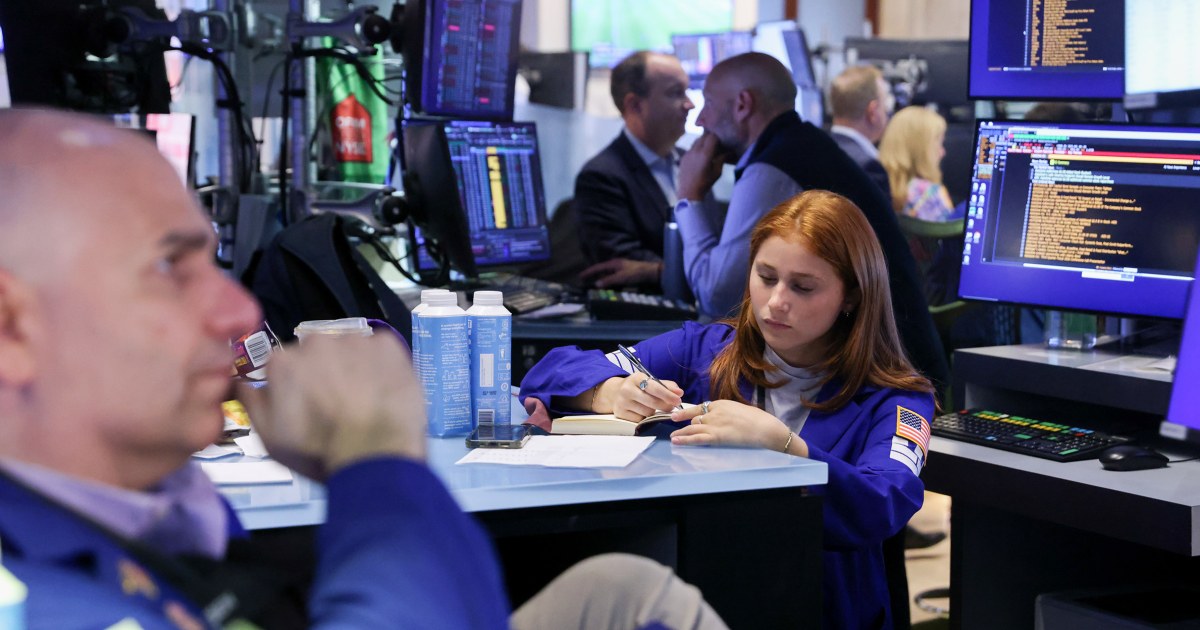
Global technology stocks tumbled Tuesday as investors questioned whether artificial intelligence investments will produce the profits that have driven sky-high valuations.
After the opening bell, the Nasdaq Composite slumped 628 points, or 2.4%, to 25,537; the Dow Jones Industrial Average slipped 305 points, or 0.6%, to 51,407; and the S&P 500 tumbled 1.6%.
By 11:45 a.m. ET, the Nasdaq 100 had plunged more than 3% and the Russell 2000 was down 1%; the Dow briefly rose but returned to negative territory, weighed down by falling shares of Caterpillar, Nvidia and Cisco.
Chip and memory names were among the hardest hit: Sandisk, Micron Technology, Western Digital, Arm, Marvell and Qualcomm each fell around 9%, Micron shares were down 10% in early trading, Nvidia fell roughly 3.5% and Broadcom tumbled 2.4%.
Shares of SpaceX slid for several trading days after a June 12 market debut, trading as low as $147 earlier Tuesday and falling to about $150.51, down $4.09 or 2.7%; the stock plunged 16% on Monday and had slumped for four consecutive trading days as investors questioned its valuation.
Recent selling in SpaceX has wiped out more than $900 billion in value from a peak above $225 per share hit one week earlier, and Monday alone erased about $400 billion — the second-largest one-day wipeout on record, according to Bloomberg, after the company announced an inaugural bond offering reportedly seeking about $20 billion on top of roughly $85 billion raised in its IPO two weeks earlier.
Market participants cited worries about the sustainability of rapid tech gains and fears that higher inflation tied to the Iran war and disruptions at the Strait of Hormuz could lead to higher interest rates and more expensive borrowing for AI infrastructure projects.
Traders have also grown more concerned about U.S. monetary policy: the Federal Reserve's rate-setting committee last week opened the door to a rate increase in 2026, traders are betting on nearly a 90% chance the Fed will raise the federal funds rate at least once by the end of the year, and economists forecast a measure of consumer inflation sped up to 4.1% in May from 3.8% in April.
South Korea's Kospi plunged 10%, falling to about 8,203.84, after shares of Samsung and SK Hynix each slid more than 12%, with signs of increased regulatory scrutiny in the country's semiconductor sector adding to the rout.
"For a long time, the market treated AI spending as unquestionably positive," Nigel Green said. "Investors are now becoming more demanding. They want evidence that unprecedented spending will translate into unprecedented profits."
JPMorgan traders wrote, "Gravity strikes," and JPMorgan analysts said the selling could reflect some "anxiety" ahead of Micron's earnings. Dan Ives of Wedbush Securities wrote, "With Micron set to report earnings this Wed there is some added nervousness on the important memory chip trade," and added, "In this market we will continue to go through a number of 'gut check moments' in the tech trade as the AI Revolution remains in the 3rd inning."
In the corporate side of the AI shift, Oracle said it shed about 21,000 roles globally over the last year, leaving it with roughly 141,000 full-time employees as of May 31, 2026, down from about 162,000 a year earlier; the cuts, about 13% of the workforce, led to about $1.8 billion in severance and restructuring costs and, the company said, reflect that "deployment of AI technologies across our operations have resulted, and may continue to result, in reductions to our workforce."
Oil markets also moved as traders digested diplomacy: S&P Global counted about 15 tankers transiting the Strait of Hormuz on Monday, and Société Générale said a "tentative U.S Iran truce has eased immediate oil supply concerns, triggering a $25–30/barrel decline in prices," while long-dated Brent remained roughly $10 a barrel above pre-war levels amid expected gradual recovery.
Markets are set to watch a key corporate and economic calendar this week: Micron is scheduled to report earnings Wednesday afternoon, and a government inflation measure for U.S. consumers is due out Thursday.