
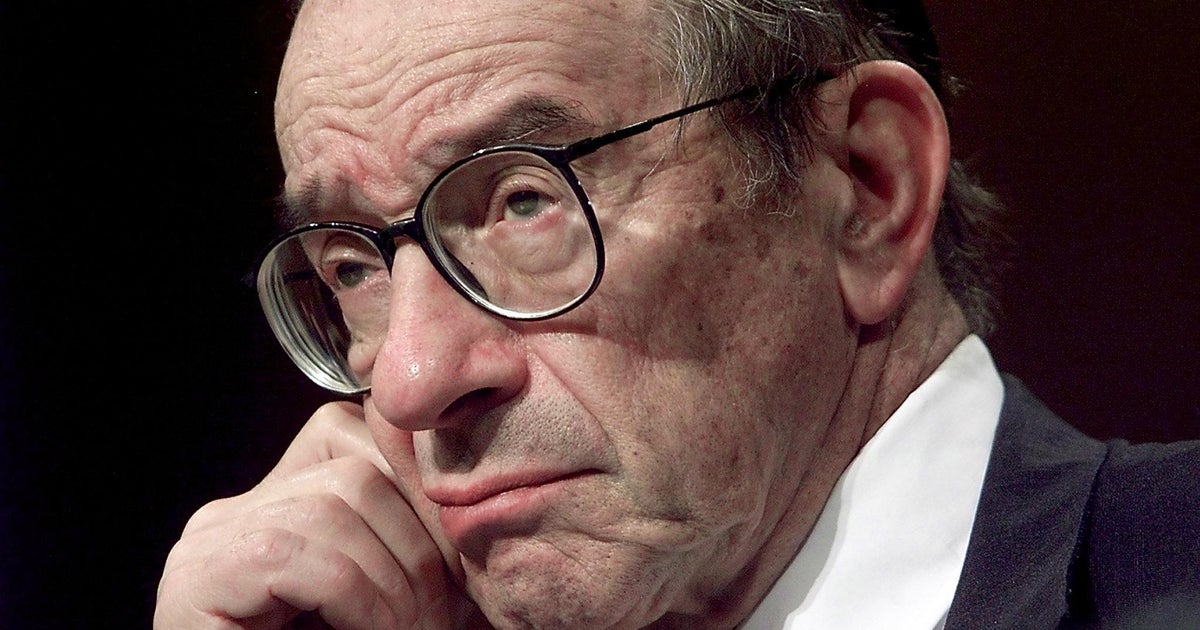
Alan Greenspan, former chairman of the Federal Reserve, died on Monday at age 100, his wife Andrea Mitchell said.
Mitchell said he died at his home from complications of Parkinson's Disease and called him "a giant of a man who helped shape the US economy for decades under presidents of both parties, but was always honest in acknowledging his mistakes."
He served as chairman of the Federal Reserve from 1987 to 2006 and presided over a period of stability often called the Great Moderation.
His tenure included high-profile interventions in market crises, notably calming the October 1987 stock market crash, and after the Sept. 11 attacks he pumped $100 billion into the monetary system and cut interest rates to help restore confidence.
Critics linked his policies to the 2008 global financial crisis, and in testimony to Congress in October 2008 Greenspan said, "I have found a flaw. I don't know how significant or permanent it is. But I have been very distressed by that fact."
Greenspan was born in New York City on March 6, 1926, studied the clarinet at the Juilliard School and later studied economics at New York University, where he earned bachelor's, master's and doctoral degrees.
He married NBC reporter Andrea Mitchell in 1997, received the Presidential Medal of Freedom and an honorary knighthood, and John Williams, president and CEO of the Federal Reserve Bank of New York, said, "His extraordinary 18 years as chairman left behind an enduring legacy, and his dedication to the institution, the field of economics and public service continues to inspire generations of central bankers."
He celebrated his centenary in March 2026 and remained a sought-after economic adviser and media commentator into his late 90s.