
President Donald Trump signed the 14-point memorandum of understanding with Iran on Wednesday, putting the agreement into effect, U.S. officials said.
The officials dictated the MOU's 14 points on a phone call, spoke on the condition of anonymity and said Iran has not officially released the memorandum.
A senior administration official delivered the text in a briefing with reporters.
The administration released the text of the agreement, and critics said the deal gives away too much to the Iranian regime.
"If it doesn't get done in 60 days, that's all right. We go back to bombing," President Donald Trump said at the G7 in France Wednesday. "I don't want to do that, because it's so good, but we might have to, because we're never going to let them have a nuclear weapon."
Paragraph 1 declares the immediate and permanent termination of military operations on all fronts, including in Lebanon, and commits both parties not to initiate war or use force against each other.
Paragraph 2 commits the United States and Iran to respect each other's sovereignty and territorial integrity and to refrain from interfering in each other's internal affairs.
Paragraph 3 commits both sides to negotiate and achieve a final deal in a maximum of 60 days, extendable by mutual consent.
Paragraph 4 says the United States will begin removal of its naval blockade immediately upon signing and will fully end the naval blockade within 30 days, with vessel traffic restored in proportion to pre-war traffic; the United States also undertakes to remove its forces from the proximity of Iran within 30 days after the final deal.
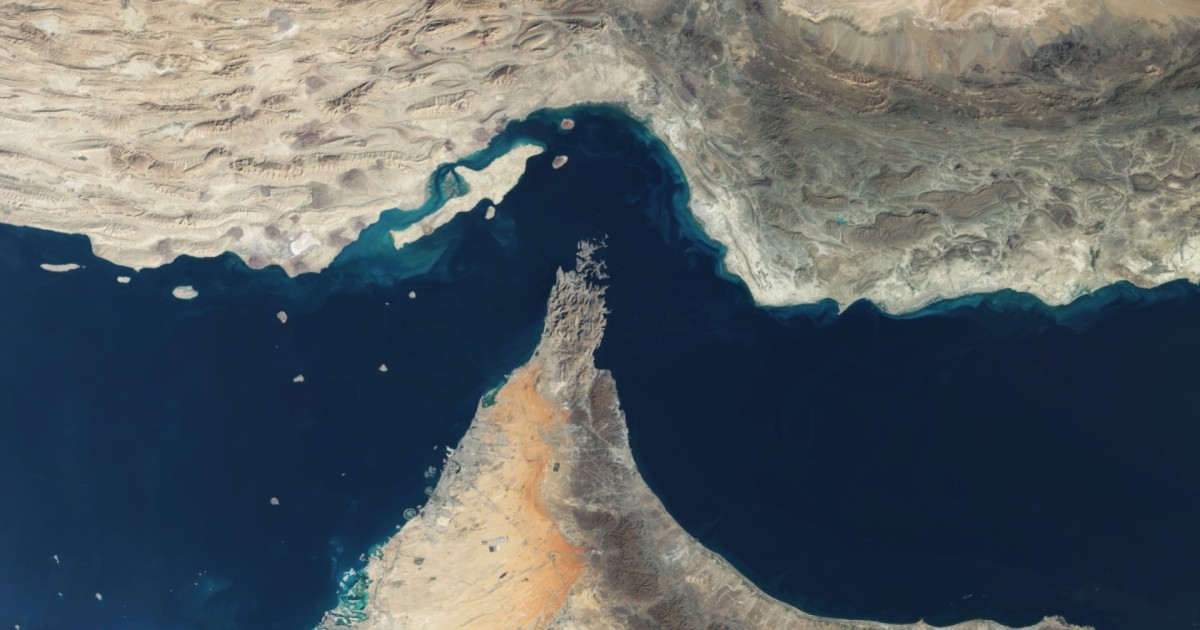
Paragraph 5 requires Iran to make arrangements for safe passage of commercial vessels at no charge for 60 days between the Persian Gulf and the Sea of Oman, to remove technical and military obstacles and de-mine within 30 days, and to conduct dialogue with the Sultanate of Oman about future administration and maritime services in the Strait of Hormuz.
Paragraph 6 commits the United States, with regional partners, to develop a definitive, mutually agreed plan with at least $300 billion for the reconstruction and economic development of Iran and to finalize the implementation mechanism as part of the final deal within 60 days, with all required licenses, waivers and permissions to be granted by the United States.
Paragraph 7 undertakes termination of all types of sanctions against Iran, including United Nations Security Council resolutions, IAEA Board of Governors resolutions and all unilateral U.S. sanctions, primary and secondary, on an agreed schedule as part of the final deal.
Paragraph 8 has Iran reaffirm that it shall not procure or develop nuclear weapons and agrees to resolve disposition of stockpiled enriched material under a mutually agreed mechanism with the minimum methodology of on-site down-blending under IAEA supervision, while the parties will discuss enrichment and other nuclear matters in the final deal.
Paragraph 9 says that pending the final deal both parties will maintain the status quo: Iran will maintain the current status of its nuclear program and the United States will not impose any new sanctions or deploy additional forces in the region.
Paragraph 10 directs the U.S. Department of the Treasury to issue waivers immediately upon signing for export of Iranian crude oil, petroleum products and derivatives and all associated services, including banking transactions, insurances and transportation, until termination of sanctions.
Paragraph 11 requires the United States to make frozen or restricted funds and assets of Iran fully available for use upon implementation of the MOU, with procedures to be mutually agreed during negotiations and such funds usable for payment to any ultimate beneficiary designated by the Central Bank of the Islamic Republic of Iran.
Paragraph 12 establishes an executive mechanism to monitor implementation and future compliance; paragraph 13 says that after signing and subject to beginning and continuing implementation of paragraphs 1, 4, 5, 10 and 11 the parties will start negotiations on the remaining paragraphs; paragraph 14 says the final deal will be endorsed by a binding United Nations Security Council resolution.
The White House confirmed that Trump signed the memorandum while at dinner at the Palace of Versailles with French President Emmanuel Macron, and Trump said, "It's signed. Signed in Versailles. Just signed it."
U.S. officials said President Trump and Iranian President Masoud Pezeshkian both digitally signed the memorandum on Wednesday.
A U.S. official said the memorandum had been signed digitally on Sunday by Vice President JD Vance and Iranian Parliament Speaker Mohammad Bagher Ghalibaf and witnessed by Trump, and that Vance will travel to Switzerland on Friday for a signing ceremony.
A senior U.S. official called Iran's commitment to the disposition of its enriched material stockpile "a major, major win for the United States of America" and said sanctions relief will be tied to the nuclear settlement and to the extent Iran fulfills its obligations.
Ghalibaf, Iran's parliament speaker, praised the agreement on state TV, saying, "This agreement is a record of America’s failure, and people will judge it," and said current negotiations were "from a position of strength."
G7 leaders meeting at Evian-les-Bains early Wednesday backed the agreement and issued a declaration calling it a "historic opportunity to prevent Iran from acquiring any nuclear weapon and tackling the threats related to its regional and ballistic activities" and said they were "ready to contribute to its implementation."
Pakistan said the memorandum of understanding was in effect after Trump and Iranian President Masoud Pezeshkian signed.
U.S. officials said the broader U.S.-Israeli war with Iran began Feb. 28; officials said fighting in Lebanon began on March 2 and has killed nearly 4,000 people, including hundreds of civilians, and displaced more than 1 million.