
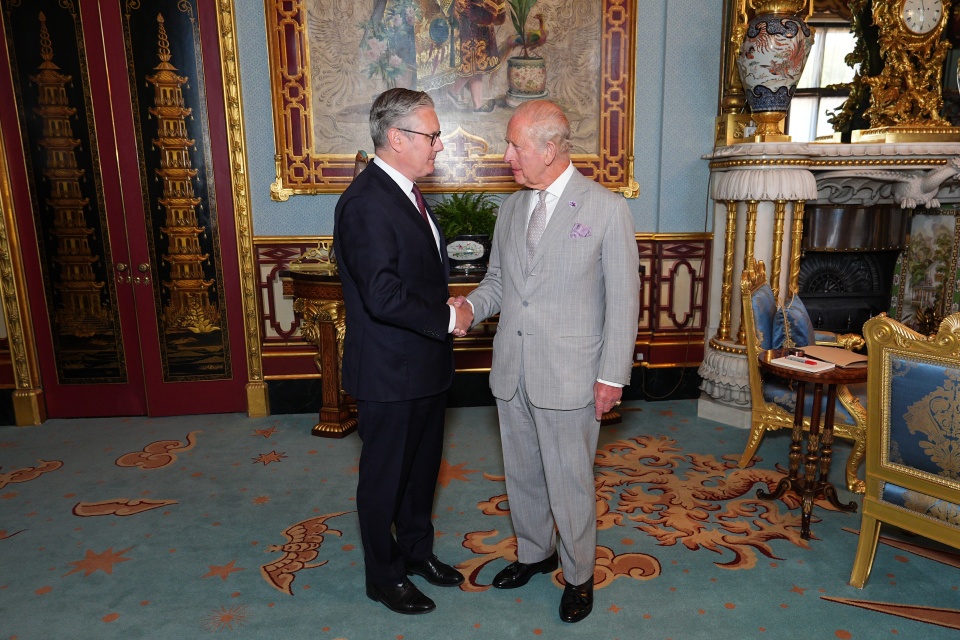
Andy Burnham became prime minister of the United Kingdom on Monday, July 20, 2026, after being asked by King Charles III to form a government.
Outgoing Prime Minister Keir Starmer traveled to Buckingham Palace to tender his resignation and earlier gave a final speech outside 10 Downing Street saying, "My work is done."
Burnham had been elected leader of the Labour Party last week; he was the only candidate in the leadership election and won nominations from 379 of the 403 Labour members of parliament.
He previously served as mayor of Greater Manchester, returned to Parliament in a special election last month, and has held several cabinet roles under Prime Ministers Tony Blair and Gordon Brown.
Born in the Lancashire region and described as cultivating a working-class hero vibe, Burnham has been known to wear T-shirts rather than suits and has moonlighted as a D.J.; polls show he is one of the most popular U.K. politicians.
On policy, Burnham has said he will scrap plans for digital ID cards, reverse the privatization of public transit and utilities, and devolve power away from London; there have also been reports he might ease a ban on new drilling for oil and gas in the North Sea, a move that drew praise on social media from President Trump.
Through the rest of Monday Burnham was scheduled to travel to Downing Street to address the press and was expected to begin appointing cabinet ministers, and he has said he would announce some measures to address soaring costs of living as soon as Tuesday.
Starmer led Labour to a landslide general election victory in 2024 but saw his personal approval ratings sink; he faced criticism over appointing Peter Mandelson, a close friend of the late sex offender Jeffrey Epstein, as British ambassador to Washington — an appointment Starmer later rescinded — and after Labour lost more than 1,000 council seats in May's local elections more of his own lawmakers pressed for his removal; he resigned as Labour leader on June 22.
Under Britain's parliamentary system the governing party can replace its leader without a national election, and the next election is not expected for another three years.
In his first public remarks as prime minister, Burnham said he was "acutely conscious" of the perception created by frequent leadership changes, calling it "a moment for reflection, and new resolution," and added, "We have not been good enough, and we need to be better. We will be."
In accepting the Labour leadership last week, Burnham said his mission was "to bring back hope" and to address decades of economic inequality plus falling living standards.
Burnham is the seventh person to hold the prime minister's office in a decade, a period the sources link to the June 2016 vote to leave the European Union, which they say shrank the British economy, triggered anger at the governing class, and contributed to frequent changes at Number 10.