
The U.S. military launched retaliatory strikes on Iran after a commercial vessel was hit in the Strait of Hormuz, with U.S. Central Command saying it struck missile and drone storage facilities and coastal radar positions.
A U.S. official said American aircraft hit multiple targets along the strait and on Iran's Qeshm Island and that the strikes are over; CENTCOM called the action "a powerful response" and said the unwarranted aggression against commercial shipping clearly violated the ceasefire. A U.S. official told reporters the strikes concluded about an hour after CENTCOM announced the action on social media.
President Donald Trump ordered the retaliatory airstrikes.
The strikes mark the first American strikes on Iran since the two countries agreed to extend a ceasefire last week, and CENTCOM said U.S. forces would continue to provide safe passage coordination and support to commercial vessels transiting the strait.
The vessel hit on Thursday was identified as the Ever Lovely, a Singapore-flagged container ship; the British maritime security agency UKMTO said it was struck 7.5 nautical miles southeast of Oman's port of Dahit and Evergreen said the ship had been following the UKMTO's recommended route when it was struck. Evergreen, the Taiwan-based owner, said in a filing to the Taiwanese stock exchange that the Ever Lovely was struck on its starboard side by an "unknown object," that its bridge windows were damaged, that the main engine and all navigation equipment continued to operate, that its seaworthiness was not impacted and that it departed the Strait of Hormuz. The U.N.'s International Maritime Organization paused its planned evacuation of more than 11,000 sailors and said the ship "did not transit under IMO's evacuation framework."
The U.S. strikes came on Friday in response to a drone attack the day before, and officials said the action was a major test of an interim understanding reached a week earlier to begin working to end the months-long war and reopen the waterway. President Trump said the drone attack violated the ceasefire and, shortly before the strikes, told reporters, "You'll find out," whether the U.S. would respond. British military officials had said a vessel was hit by a projectile off the coast of Oman; UKMTO said the vessel sustained damage but reported no injuries or environmental effects, and U.S. officials had earlier identified the attack as a drone flown by Iran's Islamic Revolutionary Guard Corps.
The attack occurred while the U.N. maritime agency was beginning an operation to move stranded ships out of the strait using an alternative route that hugs the shores of Oman; the agency halted those evacuations after the strike and said they will not resume until there are guarantees that other ships will not be attacked. Arsenio Dominguez, the agency's secretary-general, said about 115 ships were able to move out of the strait in recent days, leaving about 500 still in the area.
A review of MarineTraffic data showed at least 37 vessels had transited the strait or were in the process of doing so since the incident, with 20 of those ships taking a route far south of Iran that hugs the coastline of the United Arab Emirates and bends along Oman's Musandam Peninsula to avoid Iranian waters. Marine analysts said the pace of normalization has slowed even as the strait remained operationally open: the marine data company Windward said there were 43 transits recorded after the incident and that the pace of normalization had slowed, and it noted that on the Wednesday before Thursday's drone strike, 78 vessels transited the strait, the highest since the war began though below prewar averages. At least two tankers reversed course while attempting to use the U.N.-backed route near Oman, and Lloyd's List Intelligence said more than two dozen ships were still transiting the southern route after the attack.
Iran's Persian Gulf Strait Authority wrote on X that transit outside its own designated routes "will not be covered by the guarantee of safe passage." The naval arm of the Islamic Revolutionary Guard Corps said the route was established without notice or coordination with Iran, called it "unacceptable and completely dangerous," and said "the only authorized route for passing through the Strait of Hormuz is the one declared by the Islamic Republic of Iran," warning that "violators will be dealt with." Ebrahim Azizi, who heads the Iranian parliament's national security commission, wrote on social media that "the Strait of Hormuz is governed by Iran, so: Respect the rules" and that "This is not a violation of the ceasefire; it is ceasefire management."
The Islamic Revolutionary Guard Corps blamed the United States and Israel for the strikes and said the U.S. airstrike "violated its commitments," adding that "if the aggression is repeated our response will be more extensive than this."
The U.S. military released video of the strikes on June 27, 2026, showing the most recent strikes in Iran; CENTCOM called the action a "powerful response" to an Iranian attack on a commercial ship in the Strait of Hormuz.
U.S. Secretary of State Marco Rubio, on a visit to the Gulf to reassure American allies, said Washington was committed to the new route and to ensuring that ships are able to transit the strait and added, "If that stops, then we're going to have a problem." He met with foreign ministers from the six-nation Gulf Cooperation Council and sought to assure them their interests would be protected in any agreement with Iran.
Singapore's Maritime and Port Authority said it was "deeply concerned" and called the incident unprovoked, unjustifiable and a breach of international law. Iran has not publicly acknowledged the strike on the Ever Lovely, and the White House said it was "aware of these reports and looking into them."
The memorandum of understanding signed by the U.S. and Iran last week said Iran would "make arrangements using its best efforts for the safe passage of commercial vessels with no charge for 60 days only from the Persian Gulf to the Sea of Oman and vice versa." Iran's Deputy Foreign Minister Kazem Gharibabadi said safe passage "cannot be guaranteed through vague arrangements, parallel routes, or decision-making conducted outside of Iran's considerations as a coastal state" and warned the result will be the suspension of the designated parallel route. Gulf Cooperation Council ministers issued a joint statement rejecting any tolls, fees, or attempts to assert control over the strait.
Vice President JD Vance wrote on social media that "If they have disagreements about how the [memorandum of understanding] is being applied, they can pick up the phone. But violence will be met with violence." On Friday, President Donald Trump posted on Truth Social that "The Islamic Republic of Iran shot at least four One Way Attack Drones at Ships transversing the Strait of Hormuz. One of the Drones solidly hit the upper deck of a large and very expensive Cargo Carrying Ship. Damage was done, but the Ship was able to proceed on its way. We knocked down three other Drones. Obviously, this is a foolish violation of our Ceasefire Agreement."
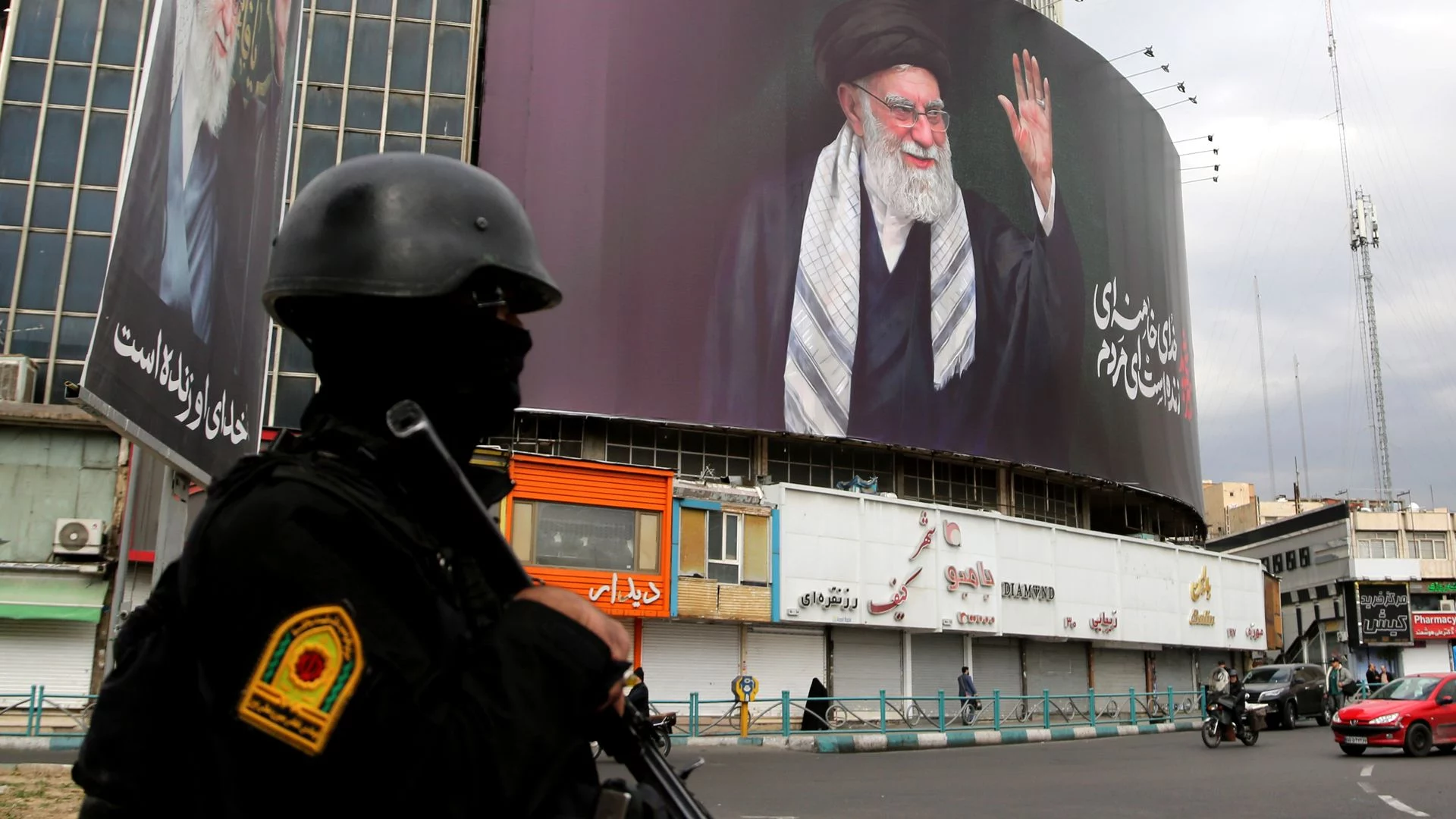
Iran's government in Tehran condemned the U.S. strikes and said they violated the memorandum of understanding between the two countries.
Iran launched a drone attack against Bahrain early Saturday, hours after the U.S. military carried out strikes on Iranian military sites, and Bahrain, which hosts the U.S. Navy's Fifth Fleet, said it was attacked by a number of Iranian drones and condemned the strikes as a blatant violation of its sovereignty.