
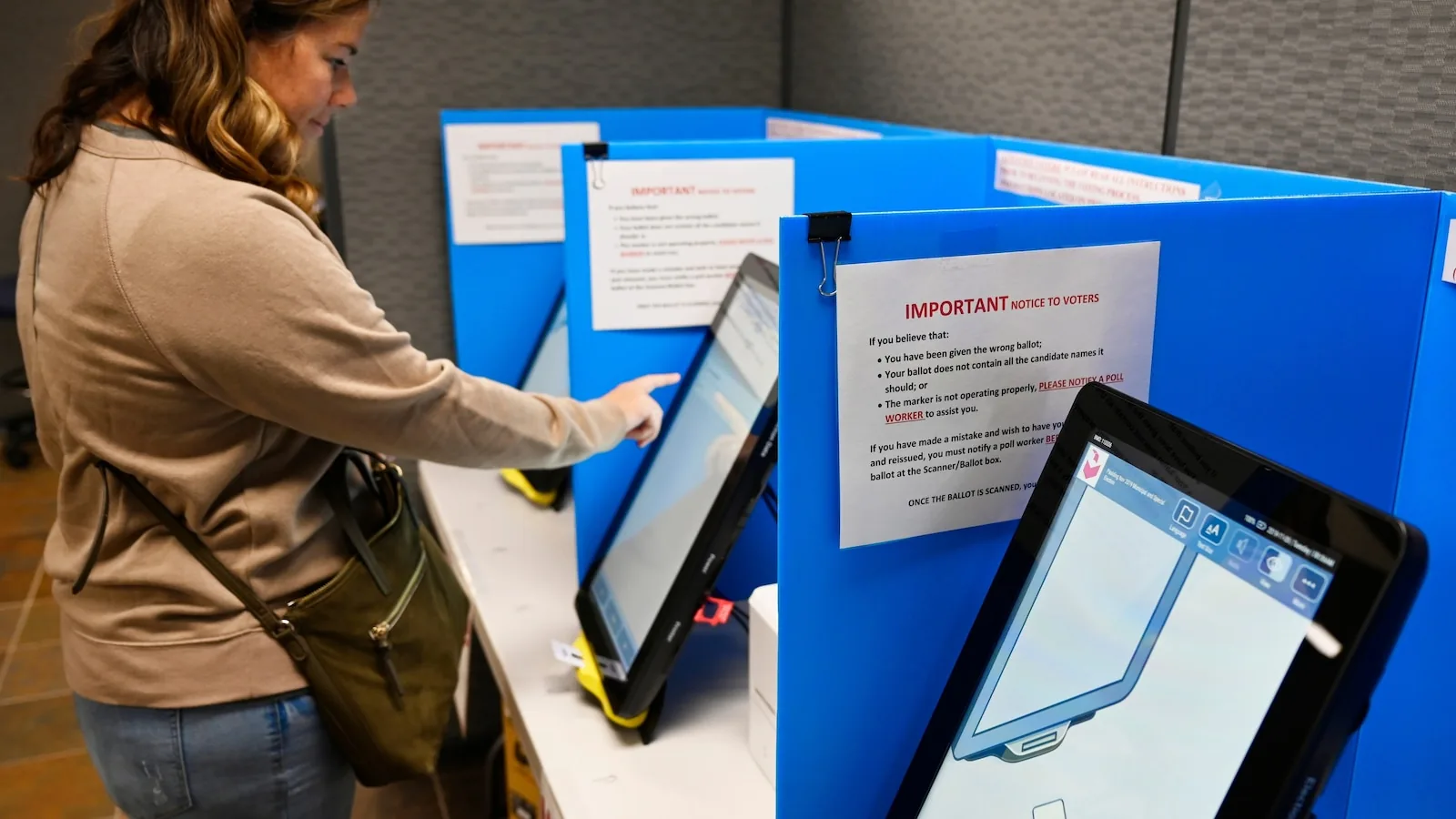
Georgia lawmakers return to the Capitol this week for a special session to fix a law that bans using ballot QR codes for official vote counts after July 1, 2026.
The state's election system relies on a QR code printed on ballots to tally votes, and legislators passed a law two years ago barring the use of that barcode for the official tabulation; no replacement method was implemented.
One of the instructions Gov. Brian Kemp laid out when he called the session was to “address issues created” by that law, and the secretary of state's office and the State Election Board have issued conflicting guidance to county election officials about how votes should be cast and counted.
If the issues are not resolved soon, there is likely to be confusion and possibly litigation over the state's elections after July 1, 2026. A special election to fill the remainder of the term of U.S. Rep. David Scott, who died in April, is set for July 28, with early voting beginning July 6.
The secretary of state's office last week issued guidance to election officials in the six counties included in that congressional district, saying it is preliminary and subject to change. The guidance says ballots will be run through the scanners, which will read the QR code to generate the election night vote count; then, before county certification, electronic images created by the scanners for each ballot will be uploaded to a server, where optical character recognition software will be used to tally the votes using the human-readable text. The results of that second process will be the official tabulation count, and the guidance expressly says counties must continue to use the current election system, including the touchscreen voting machines, and that there is nothing in the law that authorizes the use of hand-marked paper ballots for in-person voting.
Two days later the State Election Board passed a resolution directing counties to use their emergency backup - hand-marked paper ballots with scanners used to count voters' selections - if the special session does not extend the deadline. Elizabeth Young, a lawyer with the state attorney general's office, said the guidance is not binding but that “obviously it would cause confusion for elections superintendents if they are getting differing instructions from two agencies, both of which have some authority over what they’re doing.” The election board has been controlled by a Trump-aligned majority and is often at odds with Secretary of State Brad Raffensperger, a Republican who is a frequent Trump target.
Henry County interim elections director Axiver Harris said the county is aware of the conflicting guidance and is awaiting further clarification from the state, writing, “Given the uncertainty surrounding the guidance currently available, we believe it is wise to wait for further direction to ensure that any decisions made are consistent with state requirements and election administration best practices.” Marcye Scott, a candidate in the special election, said, “My goal is to get people to the polls, get my people to the polls and get them to vote for me.” Carlos Moore, another candidate, said he is worried about legal challenges if a new method of vote-counting is implemented without enough time and asked lawmakers to extend the deadline: “I would ask that legislators do the right thing, leave well enough alone for the special election. Otherwise, it’s almost certain there will be challenges in court.”