
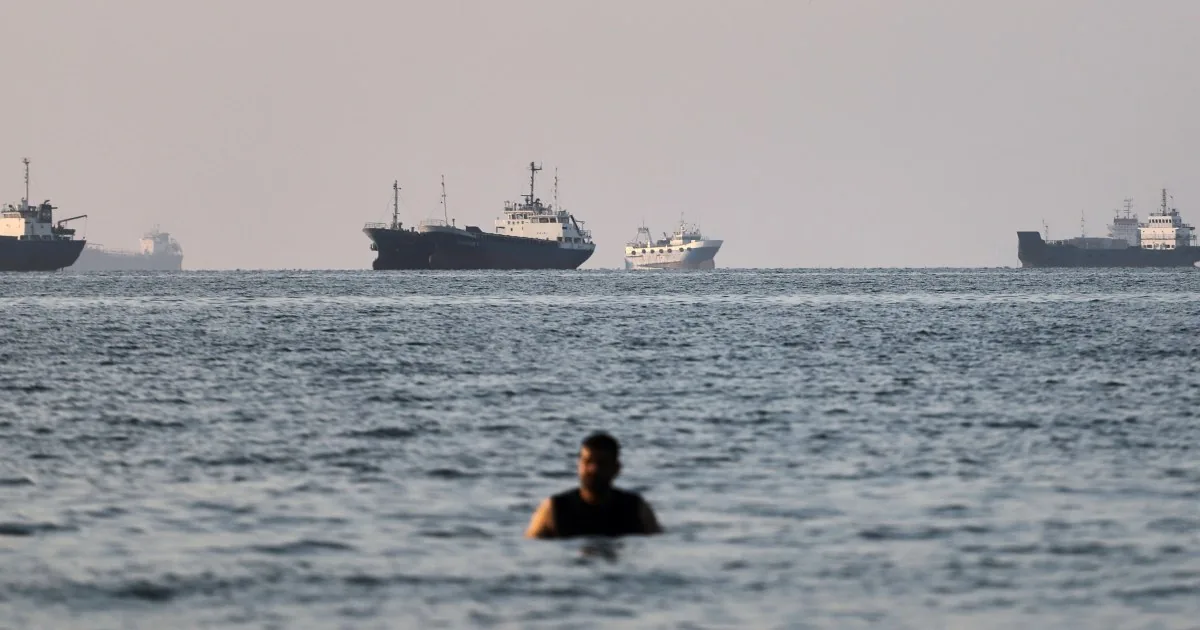
President Donald Trump said on Truth Social that the United States and Iran will sign a memorandum of understanding on Sunday, June 14, that is expected to reopen the Strait of Hormuz.
Iranian foreign ministry spokesman Esmaeil Baghaei cautioned that the exact date had not been decided and told reporters, "we will have to wait and see about the exact date of the signing of the memorandum of understanding, although it will not be tomorrow."
Iranian Foreign Minister Abbas Araghchi said Friday the memorandum "could happen within the next 1 or 2 days, or within the next few days" in an interview with Iranian state media that he posted on X, and Trump reposted Araghchi’s post on Truth Social before later writing that the deal was scheduled to be signed on June 14.
Pakistani Prime Minister Shehbaz Sharif said early Saturday that a peace deal was closer "than ever before," with finalization "likely expected in the next 24 hours," and that "Pakistan is preparing for the electronic signing of the peace deal immediately after, followed by technical level talks next week," he posted on X.
The memorandum would reopen the Strait of Hormuz immediately without tolls and restore prewar shipping within approximately 30 days, as well as lift the U.S. blockade of Iran’s ports, according to a regional source, a source familiar with the agreement and a diplomat with knowledge of the text.
The agreement would include a 60-day extension of the current ceasefire and would include an end to fighting in Lebanon, where Israel has continued a deadly offensive against Hezbollah despite existing ceasefire agreements.
Speaking on Iranian state television, Araghchi said Iran intends to charge a service fee for ships passing through the strait, adding that while "it is not possible to levy a toll on passage through the Strait of Hormuz," it would maintain control over the waterway and charge a fee for "services provided," and he said Iran’s "sword will remain poised over the Strait of Hormuz indefinitely." He said details regarding Iran’s nuclear program and the lifting of sanctions will be finalized in the next stage of negotiations.
Iran said the draft U.S. deal includes an oil sanctions waiver, limits on Iran's nuclear activities and the release of assets.
U.S. officials have said economic benefits for Iran would depend on Tehran meeting its obligations, and Treasury Secretary Scott Bessent said the deal would bring economic relief and lower energy prices, saying, "We believe that he had to take this opportunity to keep Iran from having a nuclear weapon," and, "I am very confident that the challenging time with gasoline will pass by."
Republican Sen. Lindsey Graham warned that the terms described by Iranian media would be "awful" and said Trump’s "red line" on nuclear enrichment must hold. Major Gen. Mohsen Rezaie said that Trump has agreed to release $24 billion of Iran’s frozen assets, and Trump told a news outlet he had demanded clarification for reports that claimed the country would receive billions in frozen assets, saying officials privately "apologized for putting out false information." U.S. Central Command said Iran launched several drones at commercial ships on Friday and that U.S. forces "have downed all of them in recent hours as traffic flow through the strait continues unimpeded."
Trump wrote on Truth Social that he expected the strait to be "open to all" "immediately after" the signing and wrote that "at the appropriate time, when all is calm, we will go in and get the Nuclear Dust," adding it would later be destroyed. He also warned that if things did not "work out quickly, easily and smoothly," Washington had "the ultimate alternative, hopefully never to be used again!"
The conflict began with U.S. and Israeli strikes across Iran on Feb. 28, prompting Iranian attacks on Israel and U.S.-allied states in the Gulf and effectively closing the Strait of Hormuz, and despite a ceasefire in April the U.S. and Iran have exchanged intermittent fire, including two rounds of tit-for-tat strikes this week.
Previous reports had suggested Lebanon might not be part of the deal, with Iran reportedly insisting that it be included.
Araghchi also wrote on X that "The Islamabad Memorandum of Understanding has never been closer," a separate formulation from his earlier comments about timing.
Trump said Saturday that the deal would result in the elimination of Iran's enriched uranium stockpile that could be used in a nuclear weapon.
The Group of Seven summit is set to start on Monday, and a senior U.S. official who briefed journalists on condition of anonymity said Trump planned to meet on the G7 sidelines with the leaders of Egypt, Qatar and the United Arab Emirates to discuss efforts to wind down the war. Britain and France have expressed interest in assisting with demining the Strait of Hormuz once the conflict is paused.
On Thursday Trump wrote on social media that "The Naval Blockade will remain in full force and effect until this Transaction is finalized — Time and place of the signing to be announced shortly."
A tenuous ceasefire has been in place since April 7.
Sharif added in his early morning post that "We are confident that this historic peace deal will form a strong foundation for lasting peace."
U.S. Ambassador to the United Nations Mike Waltz said on "This Week" that while he did not want to get ahead of an announcement, the president "has every intent for" the preliminary framework to be signed Sunday and that U.S. negotiators were "confident" the signing would happen, adding that the Iranians are "incredibly difficult negotiators" who have a hard time getting guidance from their supreme leader and are not always on the same page within their team.
Waltz said the highly enriched uranium "has to go" and said Iran had agreed to dismantle enrichment capabilities and end support for proxies, but he noted the memorandum is a preliminary agreement and many details will be worked out in the next round of negotiations. He said any sanctions relief would be on a pay-for-performance basis, with no upfront cash, and said verification measures would be stronger than in the 2015 deal to avoid large loopholes.
Waltz also rejected the idea of levying tolls on passage through the Strait of Hormuz, saying any such toll was "not acceptable" and "frankly, illegal," and he said even China had made clear to Iran that imposing tolls would be unacceptable.
Former Deputy Secretary of State Wendy Sherman said the shorter timetable for resolving remaining issues was unrealistic, noting a prior short-term deal that led to the 2015 talks took far longer than planned and that the technical negotiations are likely to stretch beyond 60 days.
Oil industry expert Bob McNally, founder and president of Rapidan Energy Group, said about 20% of the global oil supply transits the Strait of Hormuz and that while oil prices have dropped from their April peak, gas and diesel prices remain up nearly 40% since the start of the war. McNally cautioned that prices could still rise later in the summer even if the strait reopens and warned that a failure to reach a deal would be "really bad news for the American economy, the global economy, for our consumers."