
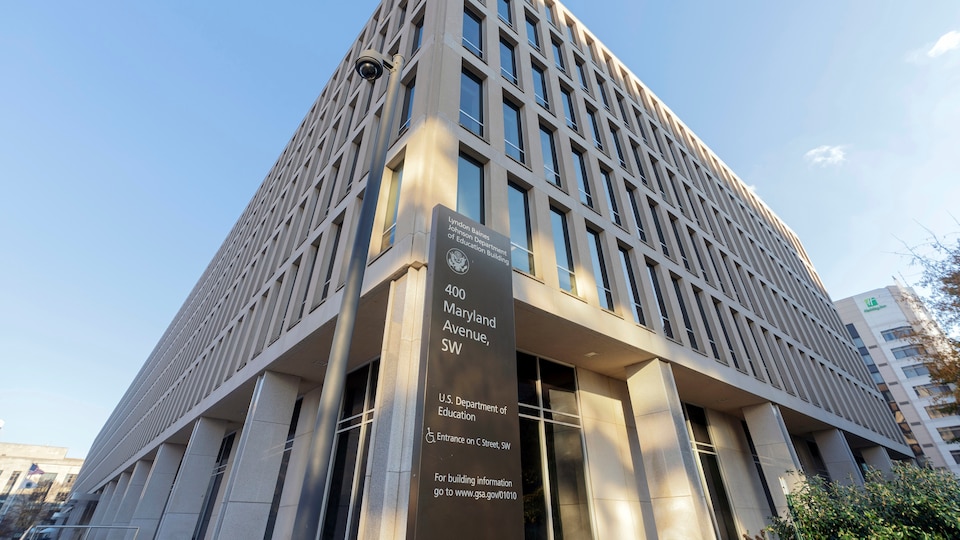
The Education Department announced Thursday it will no longer treat school policies that disproportionately harm one group of students as discriminatory unless the harm is intentional.
The department said the rule change removes a number of disparate impact provisions from its regulations related to the implementation of Title VI of the Civil Rights Act, which bars discrimination on the basis of race or national origin, and that the rule was published and took effect immediately without public comment.
Officials and advocates said the disparate impact standard has most notably been applied in schools to discipline policies, and data shows Black students have been more likely to receive punishments that remove them from the classroom, such as suspensions, expulsions and transfers to alternative schools.
"With these changes, schools will be empowered to address classroom issues without fearing the federal government will weaponize antidiscrimination laws," Assistant Secretary for Civil Rights Kimberly Richey said.
Civil rights groups condemned the move in a letter signed by 60 civil rights and educational advocacy organizations, writing, "Today’s action has no basis in law or morality and is further evidence that this administration is determined to undermine our laws, abandon civil rights enforcement, and deny the existence of systemic discrimination."
Michael Pillera, director of the Educational Opportunities Project at the Lawyers’ Committee for Civil Rights Under Law, said, "The concept is you can't create an unjust and unnecessary barrier that excludes folks on the basis of race. It has essentially the same impact as if you were doing it explicitly."
In an executive order last year, the White House directed the Education Department to issue new school discipline guidance and called for a review of organizations that had promoted policies to address disparities in discipline.
A White House executive order last April directed federal agencies to no longer rely on disparate impact analysis when enforcing anti-discrimination laws, the article said, and the Equal Employment Opportunity Commission, the Justice Department and the Department of Energy rescinded their disparate impact guidance last year; in May, fair housing groups sued the Consumer Financial Protection Bureau over its changes to disparate impact regulations.
Advocates said the change would further diminish the Education Department's role in protecting students of color, in addition to the downsizing and transfer of the Office for Civil Rights and the prioritization of cases that investigate racial equity policies as discriminatory against white students.
Hamida Labi, senior policy counsel at the NAACP Legal Defense Fund, said, "This is a part of the Trump administration’s broader overall attack on civil rights," and added, "The schoolhouse doors in 2026 don't have signs on it that say, 'whites only,' but discrimination is still very prevalent. Black students and other students of color are the ones who bear the brunt of that."