
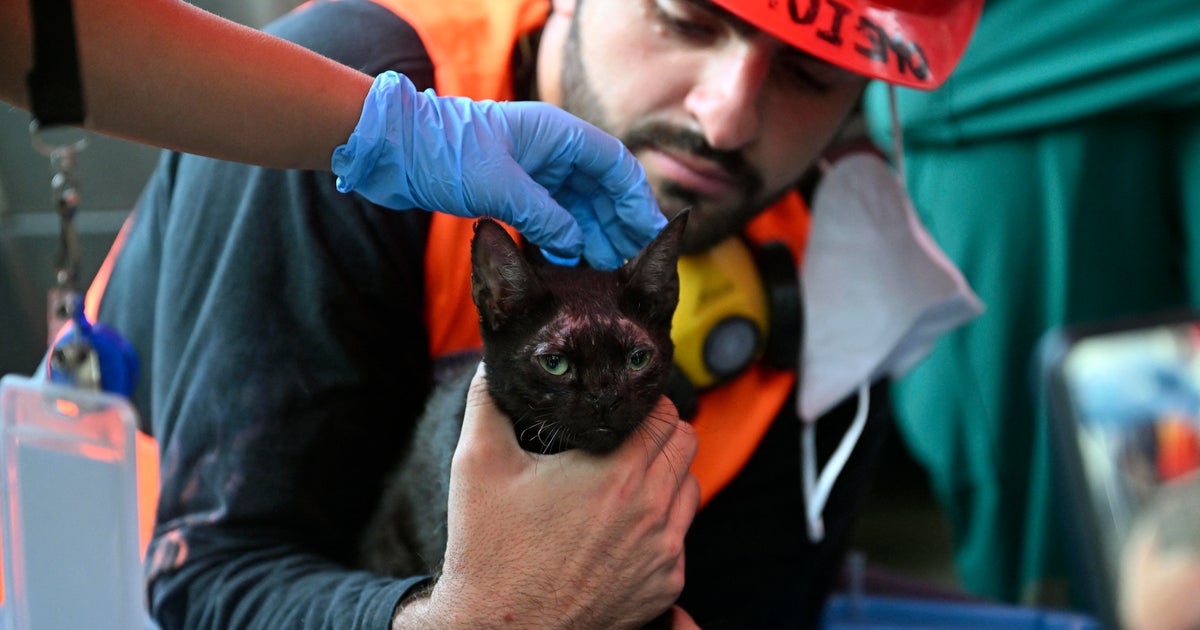
A weakened cat was pulled from the rubble of a collapsed residential complex in La Guaira on Saturday, rescue volunteer Andres Carvajal said, calling the find a "ray of hope" after back-to-back earthquakes.
"We saw the cat, it got scared and went back inside, deeper into the building," Carvajal said. "I went in, took off my glove, put some cat food on my arm... It gradually came closer and, of course, ate with a bit of desperation."
Carvajal, a 21-year-old university student who said he had written "el gato" on his helmet because it had been his nickname since elementary school, and other students from the Central University of Venezuela formed an association to help with rescue operations.
Once freed, the cat was handed over to a small camp where veterinarians were on standby; it was given fluids and cleaned before being sent to a shelter, the report said.
The back-to-back quakes that struck the South American nation on June 24 killed more than 5,200 people, with the coastal state of La Guaira hit hardest; an updated official tally on Sunday put the death toll at 5,208 and the number of injured at 16,740, Jorge Rodriguez said.
In La Guaira, recovery of bodies continues from the rubble of dozens of collapsed buildings, nearly 20,000 homeless people are crammed into makeshift camps set up in stadiums, public squares, and on sidewalks, and more than 850 buildings were damaged with 190 collapsing completely, according to official figures.
At the end of June, a search and rescue team from El Salvador pulled a small dog from rubble in Caraballeda; footage showed the canine barking from a dark crevice and then enthusiastically licking the face of her rescuer as a crowd applauded.
Outside what used to be a McDonald's restaurant in La Guaira, volunteer veterinarians set up a makeshift animal clinic for dogs, cats and other pets injured or left ownerless by the earthquakes and described their work as "war medicine."