
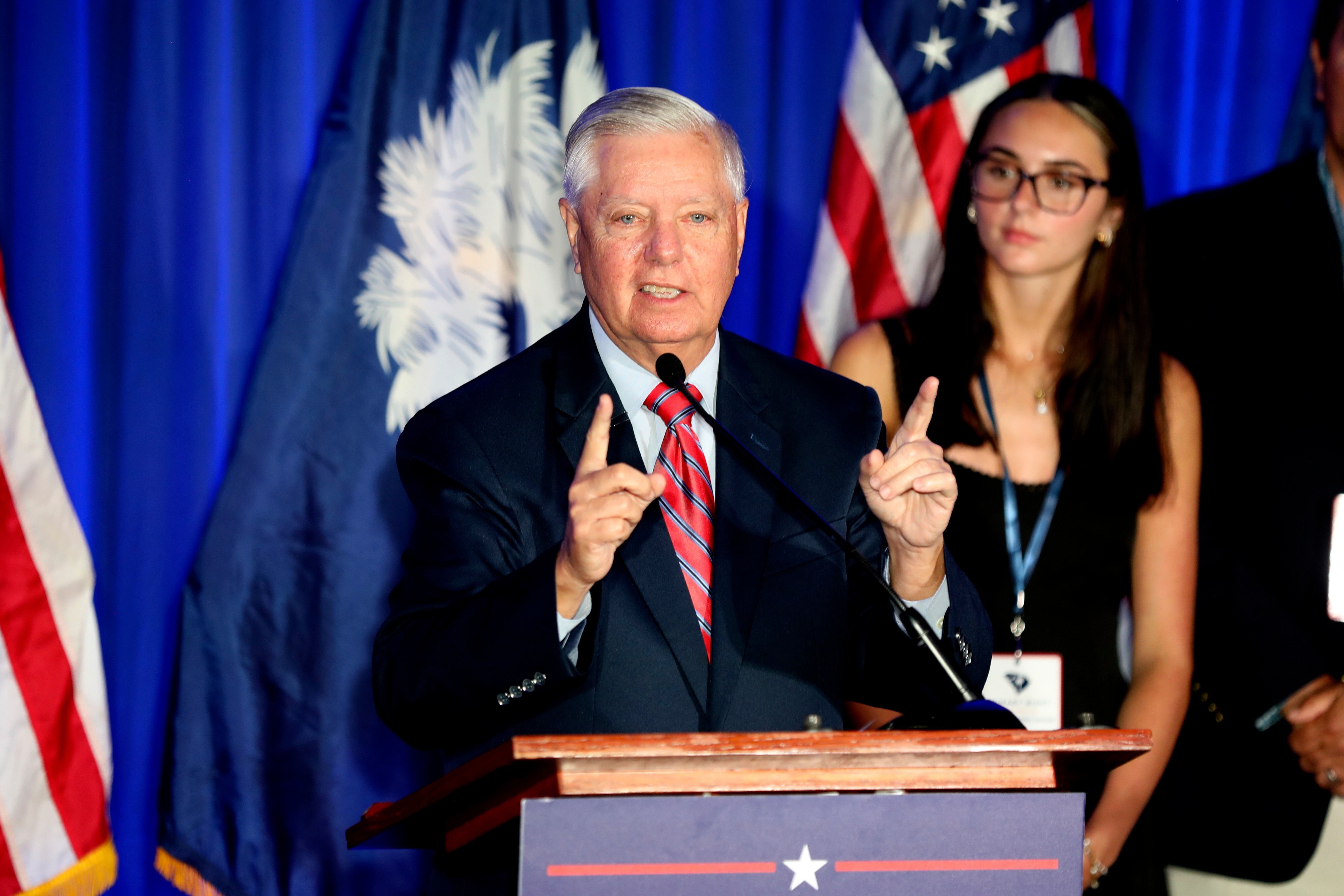
On the evening of Saturday, July 11, U.S. Sen. Lindsey Graham died after a "brief and sudden illness," his office said.
He was 71 and was elected to the U.S. Senate in 2002; he was running for a fifth term.
Graham's office posted its statement to X and did not elaborate on the cause; it said, "Senator Graham's family appreciates prayers at this time and asks for privacy during this incredibly difficult period."
A recording of an emergency phone call to a residence belonging to the senator mentions a dispatch for cardiac arrest.
Graham had been on a visit to Ukraine on Friday, where he met with President Volodymyr Zelensky; Zelensky posted video of the meeting and wrote that Graham had visited Ukraine ten times during the years of Russia's full-scale invasion and that "we met twice in just the past week."
While in Kyiv, Graham announced that lawmakers had reached an agreement with the White House on a Russian sanctions bill the president would support.
Tributes poured in from U.S. and world leaders. President Trump posted on Truth Social, "Senator Lindsey Graham, one of the greatest people and Senators I have ever known, is dead! He was always working, and was a true American Patriot. Lindsey will be greatly missed!!!" Trump added that details and arrangements would follow. Senate Majority Leader John Thune said, "my heart is heavy this morning to learn of the passing of my friend and colleague." Israeli Prime Minister Benjamin Netanyahu wrote, "Israel has lost one of its greatest friends. America has lost a great patriot. I have lost a beloved friend." Israeli President Isaac Herzog called Graham a "great American patriot" and a "true friend of Israel." NATO Secretary General Mark Rutte said he was "so sad to learn of the sudden passing of my friend Lindsey Graham." Mr. Trump and Netanyahu are expected to appear on NBC's "Meet the Press" Sunday morning to talk about Graham's legacy.
Graham was born in Central, South Carolina, on July 9, 1955; he attended the University of South Carolina for his undergraduate degree and stayed on for a law degree. After a stint in the military and years in private law practice he served one term in the South Carolina House of Representatives before being elected to the U.S. House representing South Carolina's Third District and serving eight years there, then won his Senate seat, which he had held since 2003.
Before politics he had a lengthy military career as a lawyer in the Air Force, and he remained in the Air Force Reserves while in office until his 2015 retirement as a colonel.
Graham was most known for hawkish foreign policy positions, including on Iran, and he mounted a brief bid for the Republican presidential nomination during the 2016 campaign before later becoming a close ally of President Donald Trump.
Graham chaired the Senate Budget Committee and was a senior member of the Appropriations Committee; he also served on the Judiciary Committee and chaired an Appropriations subcommittee that oversees funding for the State Department, roles that placed him at the center of high-stakes negotiations over spending and foreign policy.
His death reduces the Republican Senate majority to 52-47, and leaders face immediate decisions about committee assignments and legislative strategy as Sen. Mitch McConnell remains missing for undisclosed medical reasons. Under South Carolina law, Gov. Henry McMaster can appoint a temporary successor to finish the term, though that appointee would not automatically inherit Graham's committee posts or his expertise on defense and foreign affairs.
The Senate was scheduled this week to take up the annual defense authorization measure and the Judiciary Committee is set to hold confirmation hearings Wednesday for acting Attorney General Todd Blanche, who has faced criticism over his handling of the Jeffrey Epstein files and other controversies; GOP leaders had relied on Graham to help rally Republicans for such confirmations and for a party-line spending push that included a proposed $350 billion infusion for the military.
South Carolina's election process to fill the seat will move on an accelerated timeline. Gov. McMaster will appoint an interim replacement, filing for GOP candidates is expected to open July 21 and remain open until July 28, a special Republican primary is scheduled for Aug. 11, and if no candidate wins at least 50% a runoff would follow on Aug. 25.
Republicans are already weighing potential candidates. Pamela Evette has been mentioned as a possible contender, Rep. Nancy Mace is strongly considering a run, and Rep. Joe Wilson wrote on X that he will not seek the Senate seat. President Trump told NBC's "Meet the Press" he has "somebody that I think would be great" to fill the seat but declined to name the person out of respect for Graham.
Sen. Tim Scott said he had no insight into whom McMaster might appoint but suggested the governor could consider one or two House members and said the party should pursue an open primary. Mark Lynch, a businessman who challenged Graham in the Republican primary earlier this year, said the day was not for politics and called for recognition of Graham's service and prayers for those who knew and loved him.