
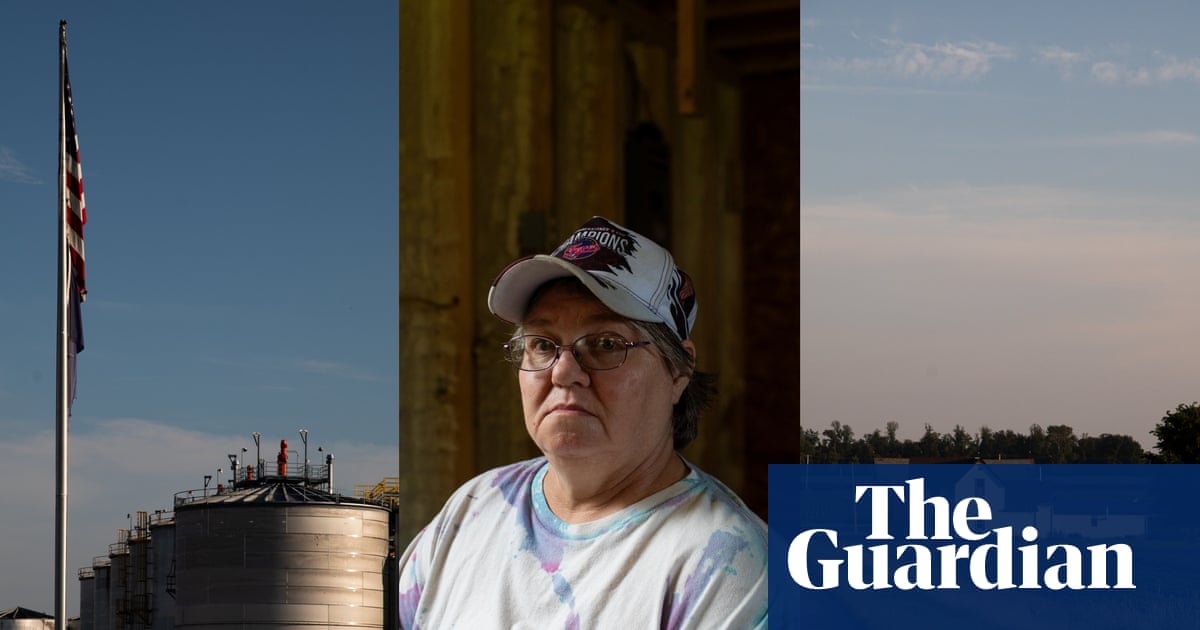
Dozens of carbon sequestration projects backed by generous US tax credits are moving toward approval, prompting alarm in small towns such as Clymers, Indiana.
"This is our place," Melissa Harrison said, noting generations of her family are buried in the town cemetery as she raises her five grandchildren among several dozen white-clapboard homes, corn fields and nearby industrial plants.
The project in Clymers is led by an ethanol plant and sponsored by Andersons Renewables, which said it "is a safe, established technology, with a rigorous permitting, engineering, and monitoring process to protect groundwater, public health, and the surrounding environment." The company said the plan would capture carbon dioxide from the ethanol production process, compress it, and then inject it deep underground, "more than 3,000 feet," after seismic analysis and drilling a test well, and that the company was partly owned by a subsidiary of Marathon Oil when it proposed the project.
Federal tax incentives have driven the rush: the program offers $85 in transferable tax credits for each ton of point-source carbon stored, and an analyst said a small project sequestering 200,000 metric tons a year can earn $17m annually through a tax credit called 45Q. Brad Johnston, an analyst with Enverus, said a "huge wave" of projects is about to be approved.
Environmental experts and critics point to risks including earthquakes, water table contamination and potentially deadly carbon leaks, and cite past incidents: two leaks at a commercial project under a lake in 2024 prompted a state ban on new CCS projects under one of the state’s biggest aquifers, and a 2020 pipeline rupture in Mississippi caused a mass poisoning that hospitalized 45 people and evacuated 200. Jack Willingham, the emergency director for the affected county, said, "It looked like you were going through the zombie apocalypse." Charles Harvey, a professor of civil and environmental engineering at MIT who helped start an early carbon-sequestration company and later became an opponent, said, "It’s just the stupidest way to reduce emissions."
Residents around projects are organizing to stop them, and Clymers has emerged as an epicenter of that push; locals say the town is already overburdened by a fertilizer supplier, a hazardous waste recycling company and the giant ethanol plant proposing the project, and that the community faces contaminated well water, a lack of sewage facilities and high poverty, with the school closed and the old Methodist church demolished. Some residents said they received letters offering $150 a year to accept the carbon sink under their properties, and farmer Dennis Crume said he refused a form offering him $150 an acre, saying, "I said that's bullcrap. I'm worried about my well." Experts said Indiana state law essentially strips individual landowners of the right to reject these proposals.
Environmental groups criticize the projects as subsidizing oil and gas industry companies and not reliably cutting emissions at scale. Kerwin Olson, executive director of the Indiana group Citizens Action Coalition, said, "You can do the math. That is a lot of cash. You're talking billions of dollars."
Only a handful of projects are operating now, but larger proposals plan to sequester tens of millions of tons and could bring revenues that rival the sale of ethanol and potentially double a plant’s earnings, the reporting said. Johnston added, "I think any additional setback from a leak or a failure of one of these wells would be pretty detrimental to the CCS industry," and said, "So I think a lot of these operators are very diligent about doing it right and probably overbuilding a lot of these systems."