
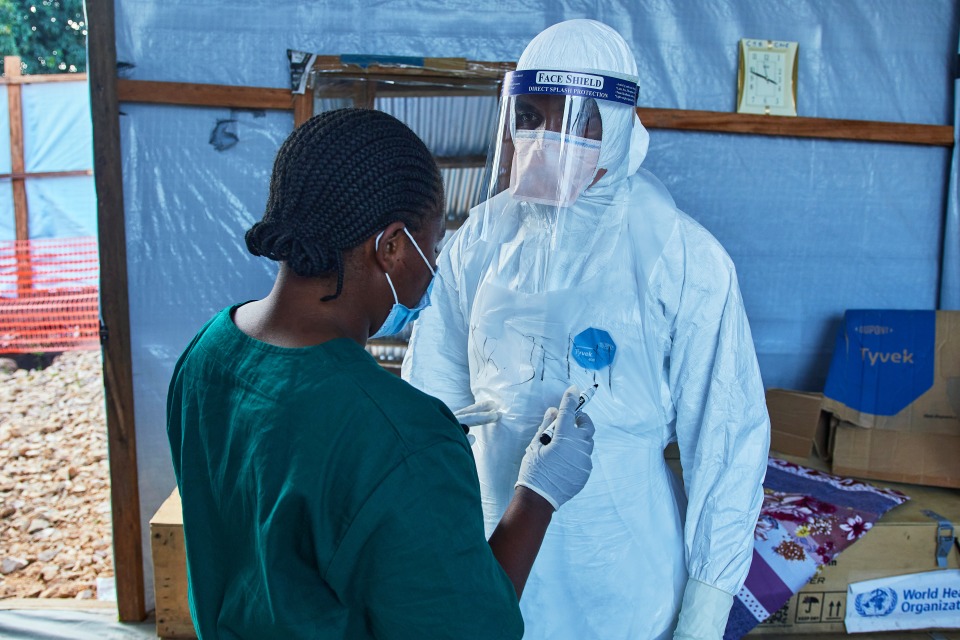
Confirmed cases of Ebola in Congo have reached 2,011 and the death toll is 754, Congo's Ministry of Health said overnight. The Africa Centres for Disease Control and Prevention called it the fastest-growing Ebola outbreak on the continent.
A total of 753 people remain in isolation or in hospitals, while 366 have so far recovered, the ministry said, and contact tracing coverage remains at 67%.
The Congolese health ministry said suspected cases have been recorded in the provinces of Tshopo and Haut-Uele, and a government report published late Wednesday said two cases were suspected in Kisangani in Tshopo; the health minister did not say how many were suspected in Haut-Uele.
The government report said one of the two suspected cases in Tshopo was linked to the Nia-Nia health zone in Ituri province, while the other "has no apparent geographical connection to known outbreaks," and authorities were investigating.
The U.S. Centers for Disease Control and Prevention said on July 11 that a U.S. citizen working for a humanitarian organization in Congo has tested positive for the Ebola virus and that it was working with the person's employer, U.S. agencies, public health authorities and Congolese partners to prevent further transmission and identify close contacts; the CDC provided no further details.
In the first week of the outbreak, an American doctor working in Congo tested positive for the virus and was transferred to Germany for treatment; after weeks of care at a hospital in Germany he recovered and, with family members who were quarantined separately, returned to the United States in June.
The World Health Organization said Tuesday that roughly 80% of new Ebola cases in eastern Congo are emerging from unknown chains of transmission, a sign the outbreak is spreading faster than health officials can track. WHO emergency chief Chikwe Ihekweazu said many of the newly reported deaths were people who died in their communities without ever reaching a health facility and that the outbreak "continues to outpace the response efforts."
Treatment capacity in Bunia is now close to 800 beds, and laboratory capacity has grown from one lab to 14 labs, Ihekweazu said.
Dozens of healthcare workers at an Ebola virus treatment center in northeast Congo went on strike over unpaid salaries and bonuses on Monday, and on Tuesday they agreed to resume work under the condition that the government pay them within 72 hours, the striking health workers said. "Just one day of strike action has already caused damage. Patients were unable to access the center," the workers said. "We hold the government solely responsible for any loss of life if the site closes after this ultimatum."
Authorities said a funding gap, attacks on health centers, an ongoing conflict in eastern Congo and mistrust among local communities have hampered the response. The Africa Centres for Disease Control and Prevention said the conflict has led thousands of people to flee the violence, spreading the virus further, and that doctors and other healthcare workers often do not have adequate protective gear.
Congolese authorities declared a fresh Ebola outbreak on May 15 after the disease had been transmitting for weeks without official detection, the WHO said, and health officials say the outbreak is caused by the Bundibugyo virus, which has no approved vaccine or treatment; clinical trials for treatment began last week after researchers launched a study.
Cases have also been confirmed in neighboring Uganda.
Initially, Trump administration officials had said the United States planned to send Americans who are exposed to Ebola while abroad to a new facility in Kenya instead of flying them home, but that project was suspended after an order from a Kenyan court; the Trump administration has asked Congress for $1.4 billion in supplemental funding to respond to the outbreak in the Congo, Uganda and elsewhere.