
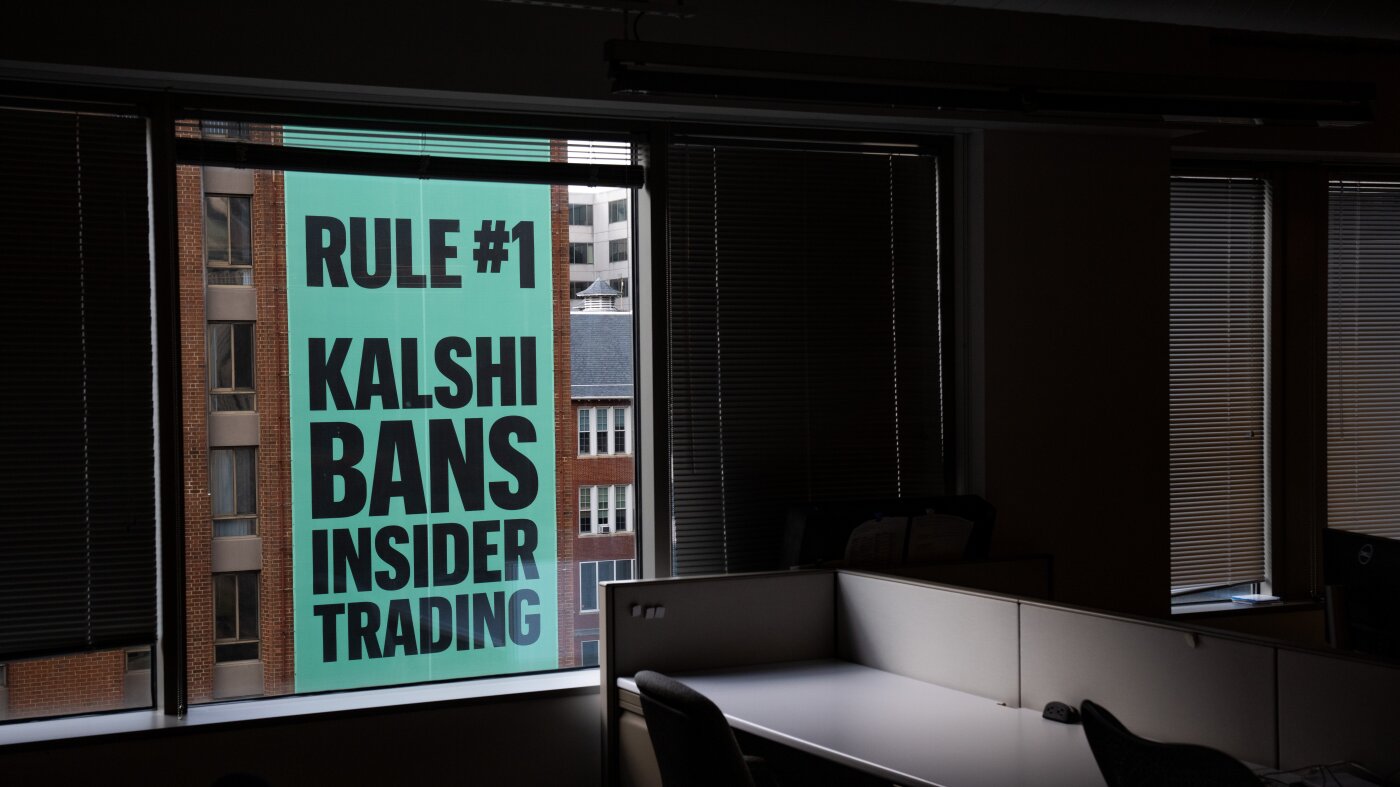
Kalshi said it blocked dozens of trades by campaign staffers after launching an FEC-based monitoring program in May, but one campaign operative listed in FEC records still traded on a race they worked on.
The company cross-references names listed in Federal Election Commission contribution and expenditure filings against its user logs, Robert DeNault, Kalshi's head of enforcement and legal counsel, said.
"If we're able to identify a potential match, we have markets that are associated with each of the campaigns that are flagged, and those individuals would be prevented from placing trades on those markets," DeNault said.
A campaign staffer who is listed in FEC records shared records of their recent trade and spoke on the condition of anonymity.
Two former FEC commissioners cautioned the data is incomplete: Sean Cooksey, who was appointed to the FEC by President Trump in 2020 and chaired the commission during the 2024 election, said, "While I think this data may be helpful in giving some picture about who is working on a particular campaign, it is by no means a complete one." Lee E. Goodman, a former FEC commissioner who served from 2013 to 2018 under Trump and President Barack Obama, said, "It is a constructive step. However, it's not a panacea because it still leaves many people who are involved in campaigns who will not show up on FEC reports."
Other blind spots include state and city elections, which use separate disclosure mechanisms, and the names of staffers' friends and family, which fall outside federal and local campaign records, DeNault acknowledged. "You have to be ready to also follow up with investigations where you've detected people who've gotten around systems," DeNault said. Kalshi spokesperson Jacki McGavick said the company launched more than 150 investigations into insider trading, blocked more than 100 insider trading moves and referred at least 20 cases to law enforcement in the first quarter of 2026.
The Commodity Futures Trading Commission has done little to police the new markets, leaving much of the work to companies themselves, and Trump-appointed CFTC Chairman Michael Selig has defended prediction markets against dozens of lawsuits from states.
At least 21 prediction market bills have been introduced in Congress this year, and none has advanced through the House or the Senate.
The House Oversight Committee is investigating Kalshi and Polymarket. Rep. James Comer, R-Ky., launched the probe after an April federal indictment against a U.S. soldier for allegedly using classified information to trade on the U.S. operation to capture Venezuelan President Nicolás Maduro in January. Comer had threatened to subpoena the prediction markets, but both Kalshi and Polymarket are cooperating with the investigation, Oversight Committee spokeswoman Jessica Collins said. In June, both companies gave closed-door briefings to the committee on "the measures they have in place to prevent insider trading on their prediction market platforms," Collins said, and the committee's investigation remains "ongoing."
Polymarket declined an interview and said it has made nearly 100 referrals across all its markets to law enforcement, including one that resulted in arrest, and that its "market integrity framework includes trade monitoring, on-chain transparency, reporting channels, and escalation processes to detect, review, and respond to suspicious activity across all markets, including political markets," a Polymarket spokesperson said. PredictIt declined an interview.