
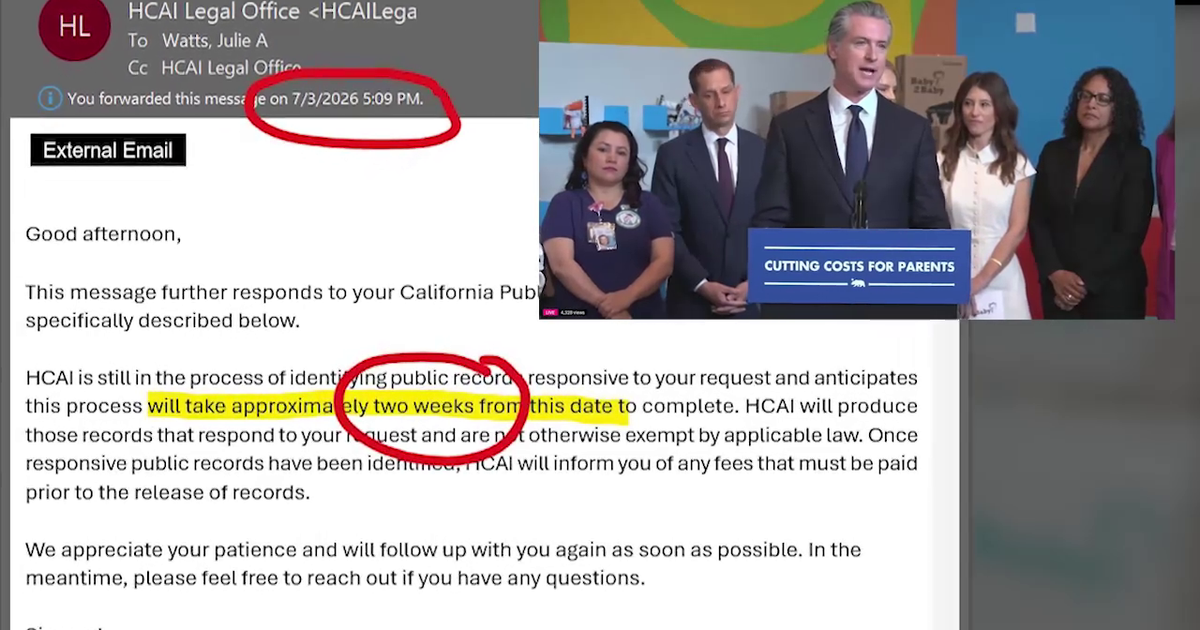
California has refused to release the Baby2Baby diaper contract more than two months after Gov. Gavin Newsom announced the multimillion-dollar partnership, despite a May 12 public records request.
The Newsom administration waited 24 days to determine whether the records were disclosable under the California Public Records Act, then said it would need another 42 days to provide the contract and competitive bid records; on the 28th day of that production window, at 5:09 p.m. on Friday, July 3, the state emailed a further two-week delay.
Requesters had asked Deputy Secretary of External Affairs Sami Gallegos and Assistant Secretary of External Affairs Rodger Butler to provide an expedited copy, but Butler referred the matter to the Department of Health Care Access and Information, which acknowledged receipt and, exactly 10 days after the request, invoked the CPRA's "unusual circumstances" provision to extend the deadline 14 days.
Fourteen days later HCAI concluded the Baby2Baby contract, procurement packet, scope of work, bid scoring sheets and vendor award documents are disclosable public records but said it would need three to four weeks to identify and produce them.
Meanwhile, lawmakers are advancing Assembly Bill 1821, introduced by Assemblymember Blanca Pacheco, which would lengthen the CPRA's response windows by changing the initial 10-day and 14-day extension periods from calendar days to business days; the bill originally would have allowed agencies to sue over allegedly "malicious" requests and to charge up to $66 an hour, but the Senate Judiciary Committee led by Tom Umberg stripped the most controversial elements.
The proposal drew pushback from the First Amendment Coalition, ACLU California Action, Common Cause California, the League of Women Voters and the Howard Jarvis Taxpayers Association; Pacheco said, "Agencies across the state are experiencing a sharp increase in requests that are exceptionally broad." Ginny LaRoe of the First Amendment Coalition said, "You should have that document in your hands. You should've had it in your hand the day they were talking about it," and Umberg said, "People shouldn't have to tell us why they want that information. People shouldn't have to pay to get information from public officials." He added, "I think there's a world where we make them do that."
Fifty-six days after the May 12 request and 60 days after the governor announced the partnership, Californians still have not been allowed to review the contract; if the state meets its latest deadline, Californians would have waited 66 days from the request and 70 days from the announcement. Until the records are public, questions will continue to mount about how this deal was reached and how competing proposals were scored.