
U.S. Central Command said it had launched more than 170 strikes on Iranian targets over two days in response to alleged Iranian attacks on commercial shipping transiting the Strait of Hormuz earlier this week, and after two days of intense strikes fighting between the U.S. and Iran appears to have paused, with neither side launching more strikes Thursday night into Friday morning.
Iran's Health Ministry said two days of American airstrikes killed at least 14 people and wounded another 78, saying most of the casualties were members of the armed forces.
The exchange of attacks widened beyond Iran's borders: sirens sounded at least three times in Bahrain, missiles targeted Kuwait and Qatar, and sirens sounded in Jordan where U.S. forces are stationed. Kuwait's military said falling debris wounded one person as it shot down three ballistic missiles, a cruise missile and 10 drones. Bahrain said it shot down incoming fire, and Jordanian government spokesperson Mohammad al-Momani said all incoming fire from Iran had been intercepted.
State media and the Islamic Revolutionary Guard Corps said U.S. strikes hit bridges; state reports said a railway bridge in Golestan province was struck and the IRGC said two bridges were attacked on the route to Mashhad, where tens of thousands of mourners thronged wide boulevards for funeral processions.
U.S. Central Command said the strikes specifically targeted Iranian air defenses and missile and drone storage and launch sites along the country's coastline at the mouth of the Strait of Hormuz.
Iranian state media reported explosions in several locations, including Bushehr, home to Iran's nuclear power plant complex, and quoted Ehsan Jahanian, a local official, as accusing the U.S. of striking near the plant around noon; Central Command referred to a press release that detailed targets but made no mention of the nuclear power plant.
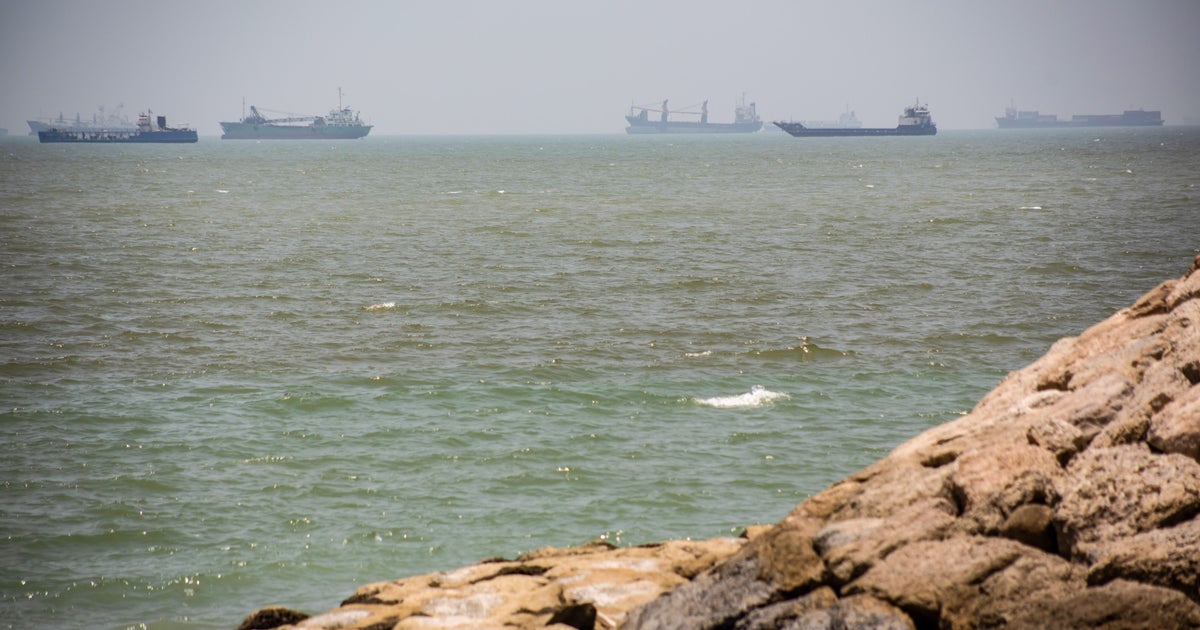
Traffic through the Strait of Hormuz had picked up since a tentative deal last month; Lloyd's List Intelligence said preliminary data showed at least 576 ships passed through the strait in June, compared with 233 in May, and that more than 3,100 transited the strait in June 2025.
The international Joint Maritime Information Center in Bahrain issued an advisory saying the southern route of the strait has been expanded and "remains available for all traffic," adding that "ships may transit the southern route without coordination" while warning that additional routes are not protected and that Tehran-designated northern routes require direct coordination with Iran's military. Lloyd's List said no large vessels had transited the southern route with transponders on since July 7 and a CBS News review found no commercial vessels publicly broadcasting intentions to transit that lane.
Lloyd's List reported that traffic had "fallen sharply" since the exchange of strikes Tuesday, and the MarineTraffic.com tracking website showed early Thursday that just three fuel tankers were openly broadcasting positions in the waterway.
Iranian Foreign Minister Abbas Araghchi held telephone calls Thursday with senior regional officials, including the foreign ministers of Oman, Turkey and Saudi Arabia and Pakistan's army chief, to discuss developments following the intense exchange; Iran's government said diplomats on the calls stressed using diplomatic channels, maintaining contacts and working to prevent further escalation.
Qatar, Pakistan and other nations that have mediated between the U.S. and Iran have been working in recent days to ease tensions and revive talks aimed at brokering a deal addressing Iran's nuclear ambitions and other sensitive matters, but sources said the dramatic flare-up earlier this week set diplomacy back.
A U.S. official said Washington views Iranian strikes earlier this week on three commercial tankers in the Strait of Hormuz as acts of terrorism, that the 60-day ceasefire signed last month is performance-based and that Iran's actions "failed performance at an unacceptable level," while technical talks between the sides are continuing.
President Trump spoke with Israeli Prime Minister Benjamin Netanyahu on Thursday, Netanyahu's office and a White House official said, and officials noted that Israel has appeared to stay out of the latest eruption of fighting and that Iran has not targeted Israel this week.
Iran's government said Mostafa Hosseini Khamenei, the eldest son of former Supreme Leader Ayatollah Ali Khamenei, led the funeral prayer as his father was laid to rest after weeklong memorial services; NPR reported the burial took place July 9, 2026, in Mashhad. CBS News said Mostafa's brother Mojtaba Hosseini Khamenei was named the new supreme leader in March but has not been seen in public since before the war and that U.S. officials have said he was severely injured in the strike that killed his father.