
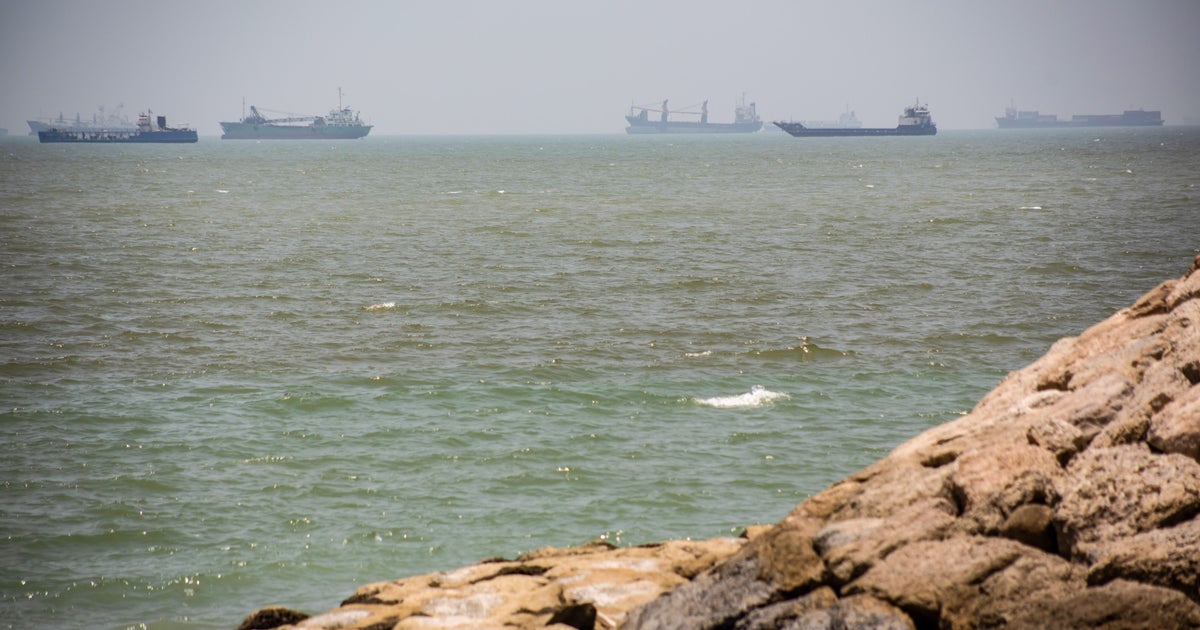
Iran's embassy in the U.K. said Monday it had established a temporary safe and secure maritime corridor, free of technical and military barriers, through the Strait of Hormuz and had notified the United Nations' International Maritime Organization, indicating a reopening from Tehran's perspective, and U.S. Central Command said it completed a third consecutive night of strikes against Iran that it began at 4:45 p.m. ET on Monday at the commander in chief's direction; the mission lasted about five hours and Centcom said it struck military targets across Iran to further degrade Iran's ability to attack commercial shipping.
U.S. Central Command said forces used multiple sea surface drones to strike a submarine and ship maintenance facility at the Bandar Abbas Naval Base, calling the attack successful, and released a video showing three small sea drones speeding toward a raised dock and exploding, sending tall plumes of smoke into the air.
Saronic, a Texas-based weapons manufacturer, said its 24-foot Corsair Autonomous Service Vehicle was used in the attacks and that Corsair drones were employed; the company said the Corsair can carry a payload of up to 1,000 pounds more than 1,000 nautical miles with a top speed of 35 knots, and that it publicly unveiled the sea drone in October 2024 and announced a $392 million production contract with the U.S. Navy in December 2025. Captain Tim Hawkins, a CENTCOM spokesman, said operationalizing new tools enhances combat effectiveness and helps keep U.S. forces safe.
Kpler said crossings through the Strait of Hormuz dropped to 22 ships last week, an almost 85% decrease from prewar traffic.
Michael Singh, managing director of the Washington Institute for Near East Policy, said the wording of Paragraph 5 of the memorandum of understanding appears to place responsibility for the straits in Iran's hands rather than reinforcing that it is an international waterway, and that the language hews more to Iran's interpretation of the deal.
President Trump on Tuesday walked back his demand for collecting a 20% toll from ships that transit the Strait of Hormuz and said he would replace the planned fee with trade and investment deals by Gulf states, writing on Truth Social, "Based on highly productive conversations with Middle East leadership, I have decided to replace the 20% United States Reimbursement Fee with Trade and Investment Deals that the various Gulf States will be making into the United States." He also wrote that the strait "is open to ALL Ship traffic except for Iran."
During a meeting with the prime minister of Iraq, Trump discussed his decision to reverse his plan to implement tolls for non-Iranian ships passing through the Strait of Hormuz, and he told reporters he had received calls from "kings and Emirs" asking him not to impose tolls. "I don't think anybody should charge a fee for the Strait or any other strait in the world," he said, adding, "I don't like the concept of a fee, but at the same time it is not fair that we are protecting this strait for the entire world ... and we are not somehow compensated." He said investments are better compensation than tolls.
Two Gulf officials said Trump's announcement on Monday about tolls caught countries in the region by surprise and that officials from several Gulf countries asked their White House counterparts for clarification. Trump spoke with Qatari Emir Sheikh Tamim bin Hamad Al Thani, and Axios noted that before the war Saudi Arabia, Qatar, the United Arab Emirates and Bahrain had already committed to invest more than $2 trillion in the United States; Trump wrote that the Gulf countries will make "new Investments" that "will make that Number even larger." U.S. Central Command said the U.S. naval blockade on Iranian ports would be in effect from 4 p.m. ET on Tuesday, and Trump's comments came several hours before that blockade was scheduled to begin.