
China's military test-launched a long-range ballistic missile Monday from one of its nuclear-powered submarines in the South Pacific, drawing protest and concern from countries in the region.
The missile was launched at 12:01 p.m. and carried a dummy warhead, Xinhua said, and the announcement was reposted by the Ministry of Defense.
Xinhua said the launch was part of routine annual training, complied with international law and practice, and was not directed against any country or target.
China last conducted a missile test in the Pacific two years ago, when it fired an intercontinental ballistic missile with a dummy warhead.
Australia, New Zealand and Japan criticized the launch.
New Zealand's government said it was informed of the planned launch hours beforehand and noted the missile was fired into the South Pacific Nuclear Free Zone, which was established by the Treaty of Rarotonga and prohibits nuclear weapons throughout the region; China ratified protocols in 1987 pledging not to test nuclear weapons within the zone or to threaten to use them against signatories with territory in the region.
Foreign Minister Winston Peters said, "It appears that despite our long-standing concerns about this type of activity, China carried out the test within hours of informing us."
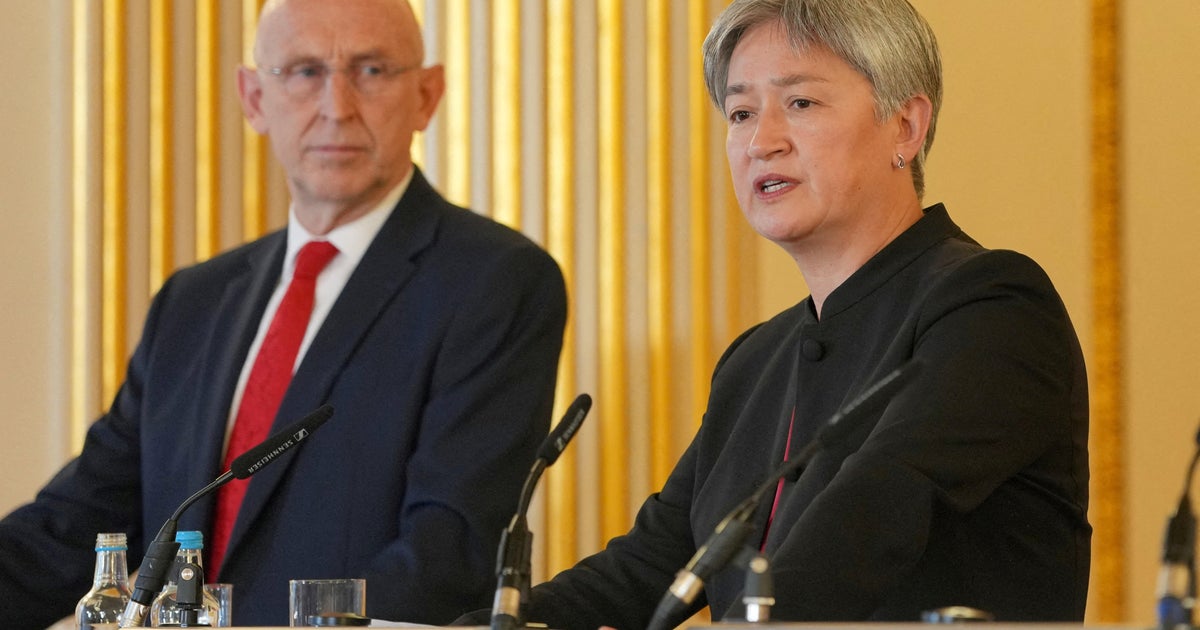
Australia's Foreign Minister Penny Wong said, "Australia has been clear with China that we regard this as destabilizing to the region," while speaking to reporters in Fiji.
The Japanese Embassy in Beijing was told about the launch by Chinese authorities before the event, and a joint government statement said, "We strongly called for a rethink of the ballistic missile test-firing, so that it won't pose a threat to Japan's security such as by passing through Japan's airspace."
China has a fleet of six ballistic-missile submarines and 59 nuclear-powered attack submarines, the Nuclear Threat Initiative, a Washington-based think tank, said.
The launch took place the same day Australia and Fiji signed a new mutual defense treaty that is meant to counter Chinese influence in the Pacific.
Xinhua also said the projectile "landed precisely within the designated waters," gave no details on the exact location or the type of projectile and reported the launch time as 12:01 p.m. local time, which it said is 12:01 a.m. ET.
The People's Liberation Army Navy said the launch was a routine part of annual training and was not directed at any specific country or target, and the Chinese foreign ministry added that it hoped countries would "not over‑interpret the situation" and that relevant countries were notified in advance.
Japanese officials said they had been advised by Chinese authorities on Sunday that space debris could fall within Japan's exclusive economic zone and expressed "serious concern" about the test; a government source told a news agency the missile ultimately landed outside Japan's exclusive economic zone.
Australian Foreign Minister Penny Wong said Australia had been told about the test ahead of time and criticized it as "destabilizing," adding that the proposed test came "in the context of a rapid military build-up by China, which is lacking in the transparency and reassurance as to intent, that the region expects," while speaking in Fiji after the two countries signed a defense alliance.
New Zealand described the test as an "unwelcome and concerning development," and Foreign Affairs Minister Winston Peters said, "We, like our neighbors in other Pacific countries, have no interest in China using the South Pacific as a testing site for missile capability."