
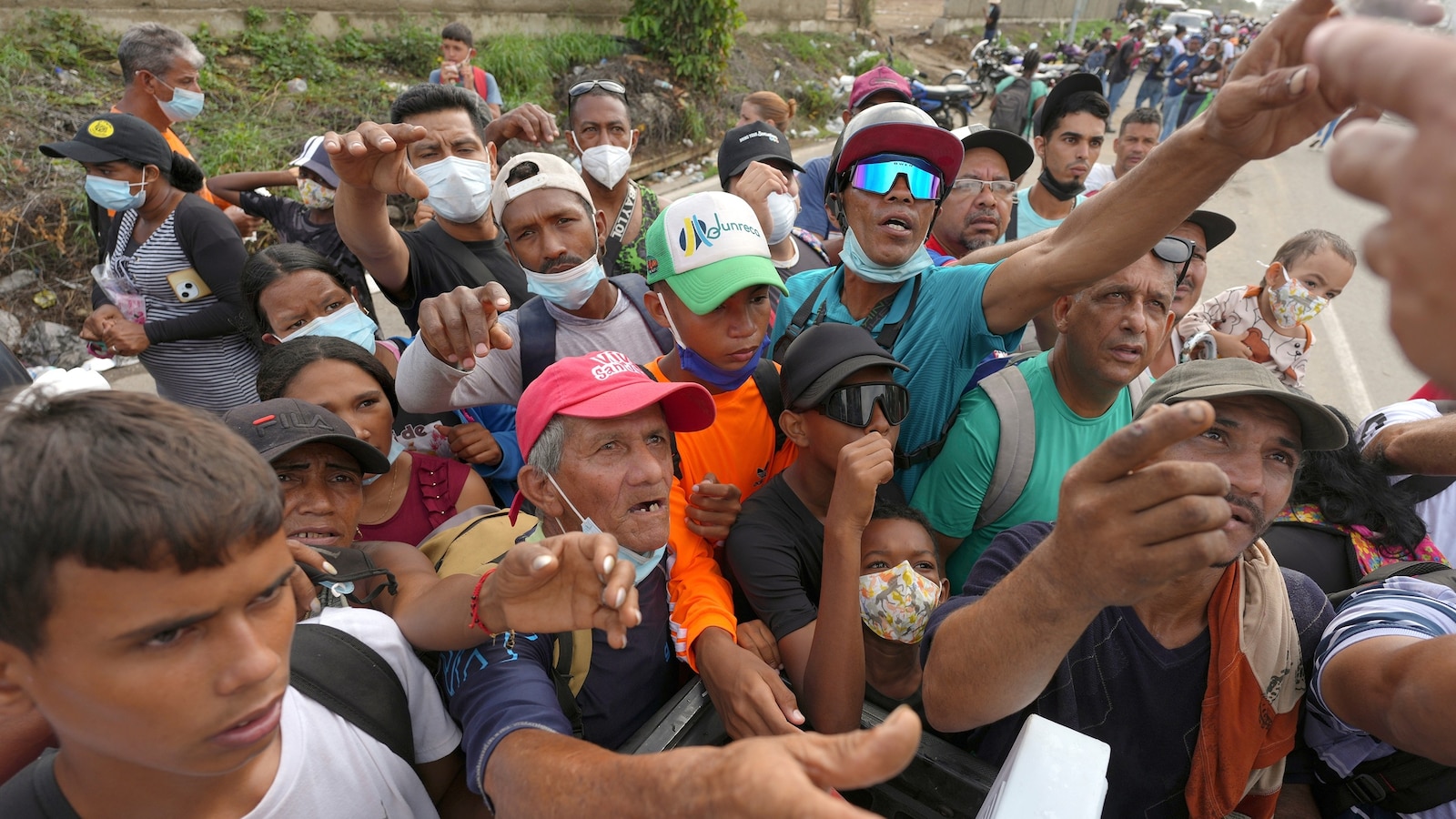
Nearly 50,000 people remain unaccounted for after back-to-back earthquakes struck Venezuela on June 24, officials said.
At least 2,295 people have died and another 11,267 were injured from the pair of earthquakes that struck on June 24, Venezuelan lawmaker Jorge Rodríguez said Wednesday.
As of Tuesday, the number of people killed had been reported as 1,943 and more than 10,000 were injured, Jorge Rodríguez said.
The earthquakes occurred within seconds of each other at 6:04 p.m. on June 24, measured magnitude 7.2 and 7.5, and had epicenters in Yaracuy; Venezuelan authorities said La Guaira was the hardest-hit area.
A NASA analysis estimated 58,870 buildings were likely damaged or destroyed by the quakes, and the U.N.'s International Organization for Migration said up to 6.8 million people could be affected and require shelter, water, sanitation, healthcare and other relief items.
Gianluca Rampolla, the U.N. humanitarian coordinator in Venezuela, said "The death toll will unavoidably and sadly keep on growing as the search-and-rescue operation continues, and as we are able to detail further assessment of the impacts of the quakes," and he said the U.N. agreed to procure 10,000 body bags, adding, "we truly hope that actually the number is going to be smaller than that."
Searchers, relatives and volunteers are digging day and night through mounds of concrete and combing through rubble with bare hands, and neighborhood volunteers in Los Corales, La Guaira, have been pulling corpses out of collapsed buildings, often using garbage bags and plastic sheets because of a lack of body bags.
The International Rescue Committee said children are among the nearly 50,000 people still missing and that Venezuela's water system has failed in some areas, leaving many survivors without guaranteed access to safe drinking water.
Karol Bassim, senior program manager with the International Medical Corps' emergency response unit, said, "Hospitals are overwhelmed. Some are operating far beyond capacity. Health workers are definitely exhausted," and aid groups warned many hospitals have been damaged.
Residents and volunteers said police and army troops were slow to arrive and sometimes set up roadblocks that required permits, and construction worker Julio Meléndez said it took two days to bring a jackhammer into a disaster zone because police wanted to see his permit and the sales receipt.
Venezuelans who had been deported by the United States hours before the quakes died when the hotel they were being processed in collapsed; there were 146 deportees on the flight from the U.S., and Alonso Guanipa Toyo said his brother, 32-year-old Víctor, is among the missing deportees.
Acting President Delcy Rodríguez said on state television that a presidential commission was assessing the state of housing and infrastructure damaged by the quakes and that work would begin to build new homes "in a very short time."
The United States dispatched search-and-rescue teams and military assets and committed $150 million to charities and U.N. agencies; the European Union said it was sending more than $5 million and hundreds of responders and activated its Copernicus satellite imagery service; and the United Kingdom sent specialist search-and-rescue teams and more than $2 million in humanitarian funding.
César Jiménez of the aid group Project Hope said, "We are doing our best as Venezuelans to support our people," and warned that healthcare facilities in the affected areas have collapsed.
Jorge Rodríguez said 26,403 people have been impacted, including those who lost homes or saw serious damage to their homes.