
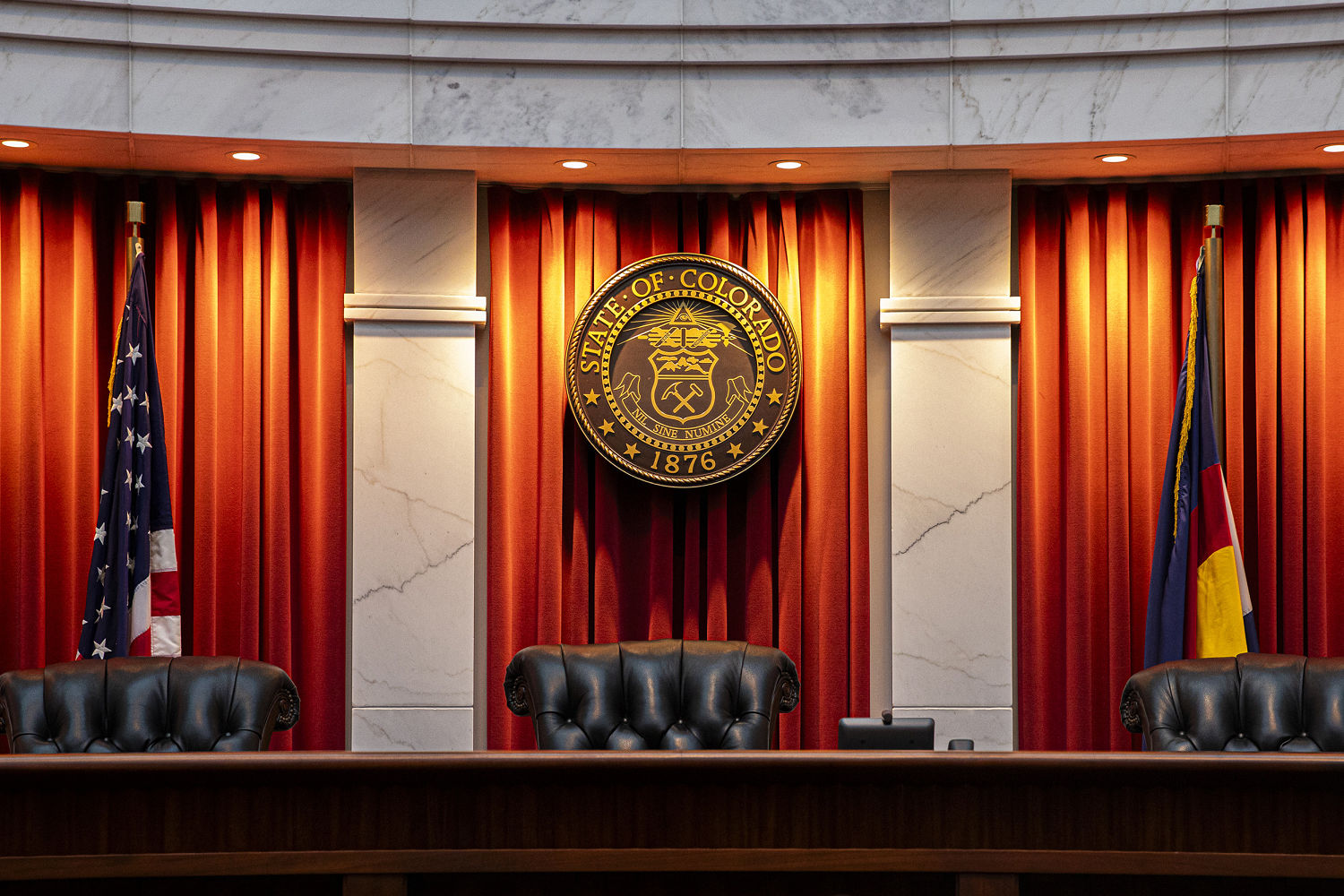
The Colorado Supreme Court on Monday rejected three proposed ballot measures that sought to clear the way for a new congressional map ahead of the 2028 election.
All three initiatives were organized by a group called Coloradans for a Level Playing Field; one measure would have put the state’s independent redistricting commission on hold and asked voters to approve a new congressional map for only the 2028 and 2030 election cycles.
Two other proposed initiatives split that plan into separate parts, with one proposal pausing the commission and the other implementing new district lines.
If the measures had appeared on the ballot this November and voters had approved them, a new congressional map would have gone into effect starting in 2028 that would put Democrats in position to win seven of eight of the state’s congressional seats, and Democrats currently hold four.
In three separate opinions the state Supreme Court wrote that the proposed ballot measures violated Colorado’s "single subject requirement."
Colorado Supreme Court Chief Justice Monica Marquez wrote in one unanimous decision, "Changing the constitutionally mandated frequency of redistricting — however temporary the change — is not merely a mechanism to administer the new congressional district map. Instead, it represents a seismic shift to Colorado’s longstanding redistricting process enshrined in the state constitution."
A second opinion, which was also unanimous, found that breaking up the original measure into two proposals still violated the rule.
A spokesperson for Coloradans for a Level Playing Field did not immediately respond to questions about the rulings. The rulings come as a frenzied mid-decade redistricting fight kicked off last summer when President Donald Trump pressured Republican state lawmakers to draw new maps to help protect the party's narrow House majority and was further supercharged this spring when the Supreme Court gutted a key provision in the Voting Rights Act, leading to GOP-controlled states carving up majority-Black districts represented by Democrats; Democrats' ability to respond has been limited in part because of independent commissions that are in place in states they control, like Colorado.
Virginia Democrats put a similar measure on the ballot this year and voters narrowly approved the referendum, but that state Supreme Court blocked it from going into effect.