
President Donald Trump announced Sunday that a deal had been reached to end the U.S.-Iran war, and Vice President JD Vance said Monday that the United States has signed a preliminary agreement intended to open the Strait of Hormuz and that the text of the deal would be released this week.
Trump wrote on Truth Social, "The Deal with the Islamic Republic of Iran is now complete. Congratulations to all!" and authorized the "toll free opening of the Strait of Hormuz" and the "immediate removal of the United States Naval blockade," saying, "Ships of the World, start your engines. Let the oil flow!"
Pakistani Prime Minister Shehbaz Sharif, who played a key mediating role, said the sides had declared the "immediate and permanent termination of military operations on all fronts, including in Lebanon," and confirmed that an official signing ceremony would take place Friday in Switzerland while preparatory technical talks are to follow.
Iranian foreign ministry spokesman Esmaeil Baghaei had earlier cautioned that an exact signing date had not been decided and told reporters, "we will have to wait and see about the exact date of the signing of the memorandum of understanding, although it will not be tomorrow."
Iranian Foreign Minister Abbas Araghchi had said the memorandum "could happen within the next 1 or 2 days, or within the next few days" in comments posted on X, and he told Iranian state television that while "it is not possible to levy a toll on passage through the Strait of Hormuz," Iran intends to charge a service fee for services provided and that Iran’s "sword will remain poised over the Strait of Hormuz indefinitely." Araghchi also wrote that "The Islamabad Memorandum of Understanding has never been closer."
The draft memorandum is reported to be composed of 14 points and to include an end to the war and the withdrawal of U.S. forces, limits on Iran's nuclear activities and an affirmation of Iran's commitment under the Nuclear Non-Proliferation Treaty to abstain from producing nuclear weapons, according to reporting by Iranian state-affiliated outlets cited by diplomatic sources.
Reports say the draft would reopen the Strait of Hormuz immediately without tolls, restore prewar shipping within about 30 days and lift the U.S. blockade of Iranian ports, and that a 60-day window has been set for final negotiations focused on nuclear issues, remaining sanctions and relevant U.N. and IAEA resolutions.
Iranian and other reports say roughly $24 billion in frozen Iranian funds would be unfrozen during the 60-day window, with roughly half released before final negotiations begin, while other points in the draft call for the suspension of some oil and financial sanctions and for reconstruction plans to be submitted by the U.S. and its partners.
U.S. officials have stressed that economic benefits for Iran would depend on Tehran meeting its obligations; U.S. Ambassador to the United Nations Mike Waltz said negotiators were "confident" a preliminary framework would be signed and that any sanctions relief would be pay-for-performance with strong verification measures, and Treasury Secretary Scott Bessent said the deal would bring economic relief and lower energy prices.
Qatar and Pakistan were named as mediators in the talks, with Qatari mediators leaving Tehran after 17 hours of intensive negotiations, and separate preparatory meetings with each side are set to take place in Doha this week ahead of the official signing and technical talks, a diplomat said.
Israel expressed resistance to parts of the deal related to Lebanon, with Prime Minister Benjamin Netanyahu telling President Trump that Israel would not pull its troops from Lebanon and did not consider itself obligated to go along with Lebanon-related parts of the U.S. agreement, and Israel's cabinet backing that position; Defense Minister Israel Katz warned that Israel would retaliate if Iran attacked.
The memorandum's announcement pushed oil prices lower: U.S. crude fell more than 4.5% to about $80 per barrel and Brent to about $83, according to market reporting, though energy experts cautioned prices could still rise later in the summer even if the strait reopens.
Questions remain about implementation: Iran has effectively controlled the strait since shortly after the war began, and the U.S. says Iran has laid mines in the strait. Trump said the channel would open "upon the signing of the Deal on Friday, for purposes of mine removal." The White House had not immediately responded to requests for comment.
The conflict began with U.S. and Israeli strikes across Iran on Feb. 28 and has killed thousands, with U.S.-based rights groups and reporting documenting large numbers of deaths in Iran and Lebanon and U.S. service member casualties, figures underscoring the human cost that negotiators say the memorandum aims to address.
Domestic U.S. reactions were mixed: Republican Sen. Lindsey Graham warned the terms described by Iranian media would be "awful," while some GOP lawmakers praised the administration; Maj. Gen. Mohsen Rezaie said Trump had agreed to release $24 billion of Iran's frozen assets, a figure also cited in the draft reports, and Vice President JD Vance said logistics for the signing were still being worked out and that he "certainly plan[s] to be there," while leaving open the possibility the president could sign electronically.
Iran's Supreme National Security Council said the deal was reached "following a difficult and intensive period of negotiations lasting several months," and it said final negotiations would be postponed until after the implementation of the other party's commitments under the memorandum.
Trump said Iran would be permitted low-level nuclear enrichment and also warned that if no agreement is reached during the 60-day talks he could relaunch attacks on Iran or make the U.S. "the guardian of the Middle East" in return for 20% of the region's revenues.
Iran Deputy Foreign Minister Kazem Gharibabadi said Iran sees the deal as a victory.
Vice President JD Vance said that Iran never possessing a nuclear weapon was "built into this agreement" and that the U.S. would be able to verify compliance.
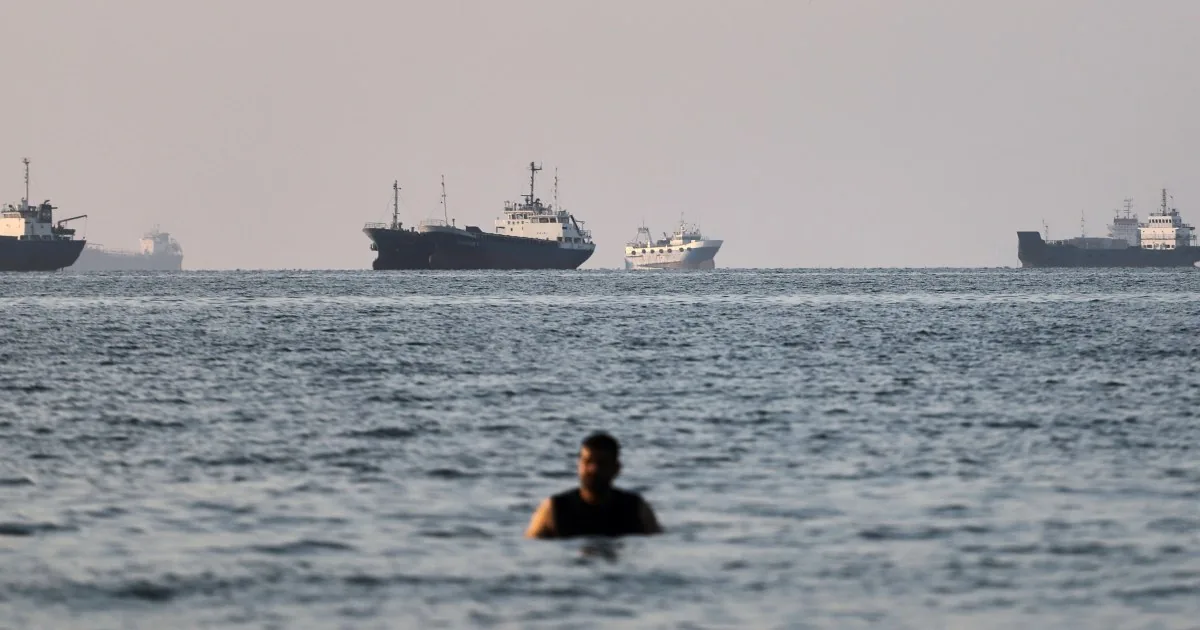
Analysts warned that reopening the strait would not immediately restore prewar oil flows: Iran's control of the channel had virtually shut down a passage that handles about 20% of the world's oil, and clearing a backlog of tankers, removing mines and restoring regular oil shipping and production could take weeks.
Leaders in the Middle East and Europe praised the deal: Qatari Prime Minister Sheikh Mohammed bin Abdulrahman bin Jassim Al Thani, who helped mediate the talks, thanked Pakistan and urged "positive and constructive" negotiations ahead; European leaders from the U.K., France, Germany and Italy called for swift implementation; and U.N. Secretary-General António Guterres called the deal a "critical step," with his spokesperson saying he hopes parties will build on the momentum toward a final resolution of the conflict.
Vance said the United States would release the text this week and warned in a brief remark that, "We’ll be releasing the text this week and what everybody will see is that Iran doesn’t get a dime of money unless..."