
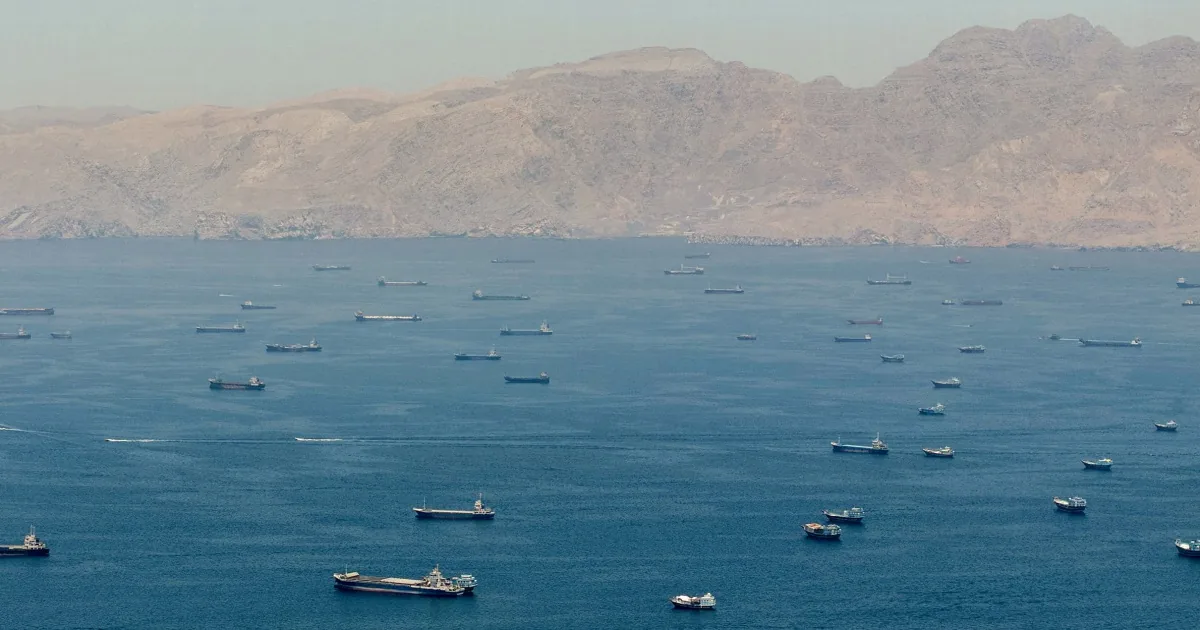
President Trump said Thursday that he canceled planned strikes on Iran, citing progress in discussions with Tehran’s leadership and saying a peace deal will be announced soon, as Iran launched strikes and missile and drone attacks that targeted U.S. bases in Jordan and Gulf countries including Bahrain and Kuwait.
Trump wrote on Truth Social, "Based on the fact that discussions with the Islamic Republic of Iran have been brought to the highest level of Iranian leadership and approved, I have, as President of the United States of America, cancelled the scheduled strikes and bombings against Iran this evening." He added that "The Naval Blockade will remain in full force and effect until this Transaction is finalized — Time and place of the signing to be announced shortly," and he told aides in the Oval Office, "We should get done over the next few days. We're going to have a signing, maybe in Europe, and it's a great thing."
An AH-64 Apache helicopter was shot down by an Iranian drone near the Strait of Hormuz, and its two-person crew was rescued by an unmanned surface sea drone.
U.S. Central Command confirmed the helicopter went down on June 8 at 7:33 p.m. ET and said the two soldiers were rescued about two hours later; CENTCOM said both are in stable condition.
Capt. Tim Hawkins, the spokesman for U.S. Central Command, said the surface drone that assisted in the rescue was a U.S. Navy Corsair unmanned surface vessel operated by U.S. 5th Fleet’s Task Force 59 and that the task force began fielding these drones in theater in late March. A market research firm estimated the cost of the boat drone used to rescue the Apache crew at about $1.2 million; U.S. officials described the vessel as looking like a speedboat, and it located the two crew members, who boarded the craft and were taken to another location on the water where they were hoisted up to a helicopter for further transport.
Jordan said it shot down five incoming missiles it said had targeted the Muwaffaq Salti Air Base and that there were no injuries; Bahrain and Kuwait said they intercepted incoming fire. The Jordanian military also said it intercepted 20 Iranian missiles launched toward Azraq, where an American military base is located, and that aircraft had intercepted and shot down the missiles with no injuries or damage reported from falling debris. Iran's Islamic Revolutionary Guard Corps said it had targeted the Al-Azraq Air Base and its control center using 12 ballistic missiles and claimed to have destroyed those facilities and a large number of fighter aircraft, the Tasnim news agency reported.
A tanker off the coast of Oman near the eastern entrance to the Strait of Hormuz issued a distress call saying it had been struck by a missile and that a fire had broken out in its engine room, and the U.K. Navy's Maritime Trade Operations agency said local authorities reported a fire in a tanker's engine room and were on the scene assisting with evacuation, reporting two people missing and one casualty with unspecified injuries and that there had been no known environmental impact. The United States said an American aircraft fired "precision munitions" into the engine room of the Palau-flagged vessel M/T Settebello as it attempted to breach the naval blockade with a shipment of Iranian oil; U.S. Central Command said American forces warned the crew before firing and said the Settebello was the eighth merchant vessel disabled by U.S. forces in waters off Iran.
India's Minister of Ports, Shipping & Waterways Sarbananda Sonowal announced that three Indian mariners who were initially reported missing after the Settebello was struck are now confirmed dead after two bodies were recovered; India's foreign ministry earlier said 21 others were rescued from the vessel.
Iran's Revolutionary Guard said it retaliated by firing on 18 U.S. sites in the region, naming military bases in Kuwait, Bahrain and Jordan; so far there have been no reports of damage or casualties from those retaliatory strikes, the Revolutionary Guard said.
A Qatari negotiating team returned to Doha after meetings in Tehran, a Qatari official said. Pakistan's foreign ministry said its leaders remained engaged in mediation efforts to broker a negotiated settlement between Iran and the United States, and foreign ministry spokesman Tahir Andrabi said, "It is hard to be an optimist in the new exchange of hostilities. We haven't lost hope, we remain engaged."
The semi-official Iranian news agency Mehr, citing the governor of Sirik county, reported that an Iranian cargo dhow was struck by U.S. forces in the Gulf of Oman five nautical miles off the port of Khasab; Mehr said the 150-ton dhow was carrying essential goods and that five crew members on board were rescued by nearby vessels and brought ashore in Oman.
Bahrain's Ministry of Interior said an 11-year-old girl sustained minor injuries after an Iranian drone was intercepted over the country, and that falling debris had caused damage to houses and set fire to cars in Hamad Town and Manama.
Iranian Foreign Minister Abbas Araghchi condemned the American attacks as a violation of Iranian sovereignty, and Foreign Ministry spokesperson Esmail Baghaei said Tehran would review its stance on negotiations. Ambassador Amir Saeid Iravani told the U.N. Security Council that the U.S. should refrain from threats of force if it wants a deal, and a delegation from Qatar arrived in Tehran for talks after consultations with the U.S., an official said.
Defense Secretary Pete Hegseth said the goal of the latest strikes is to force Iran to the negotiating table. "If we need to negotiate with bombs, we'll negotiate with bombs. And we're very good at it," he said.
Gulf Arab nations condemned the new Iranian attacks on Bahrain and Kuwait.
President Trump said in a Truth Social post on June 11 that the United States would "be taking Kharg Island" and other Iranian oil infrastructure "in the not too distant future" and warned the U.S. would hit Iran "very hard" immediately; he told Fox News shortly after that he was not sure "America has the appetite" for an operation to seize the island. The U.S. military previously said strikes on March 13 had "totally obliterated" every military target on Kharg Island.
Kharg Island lies roughly 20 miles off Iran's northern Gulf coast and serves as a major hub for Iranian oil exports, historically handling 85% to 95% of the country's crude exports, with tankers loading there before heading through the Persian Gulf and the Strait of Hormuz; analysts said if the island's loading facilities were knocked out, Iran's ability to export oil would collapse almost immediately, and the report said global oil prices, which have been up around 30% since the war began, could rise further if oil infrastructure is struck.
The report described the current fighting as part of a war between the two countries that was launched jointly by the U.S. and Israel on Feb. 28 and said the conflict appeared to be reigniting; national security analyst Aaron MacLean said, "The president has linked the vulnerability of Kharg Island to Iran's continued closure of the Strait of Hormuz."
A U.S. official said it appeared Iran had attempted to strike commercial ships transiting the Strait of Hormuz early Friday morning local time and that U.S. forces had shot down two Iranian one-way attack drones; some traffic flow through the strait continues, the official said.
Iran has not reached a final decision on a peace deal, an Iranian official said Thursday. "So far, Iran has not reached a final conclusion on the agreement," foreign ministry spokesman Esmaeil Baqaei said in a statement. Iran's semi-official Fars News Agency quoted a "knowledgeable source close to the Iranian negotiating team" who denied the president's claim about an agreement on an initial deal and stated that "no text of the initial memorandum of understanding with the United States has been approved," and the Tasnim news agency noted the president had announced a deal was imminent many times previously.
Two sources familiar with the diplomatic efforts said a letter of intent or memorandum of understanding between the U.S. and Iran was likely to be signed early next week, which would kick off 60 days of talks to negotiate details of a U.S.-Iran agreement; that period could be extended as needed, the sources said. First steps would include ensuring "freedom of trade" by demining and opening the Strait of Hormuz, and in principle Iran would commit to a lockout of 15-20 years during which it would not enrich uranium and would dismantle its nuclear sites. In exchange for taking these steps, Iran would receive financial relief staggered over time and sequenced to correspond with compliance, the sources said.
The Israeli military said it had killed 80 Hezbollah fighters and attacked approximately 310 targets related to the Iran-backed group in southern Lebanon in the past week. Israel and Lebanon agreed to renew a ceasefire agreement last week, but the Iran-backed Hezbollah paramilitary group quickly rejected it. Israeli Prime Minister Benjamin Netanyahu held a call with President Trump Thursday night regarding the possibility of a pending peace deal, and Netanyahu's office said it appreciated Trump's commitment that a final agreement would include the removal of enriched material, the dismantling of enrichment infrastructure, limits on missile production and the cessation of Iran's support for its terrorist proxies in the region.
Jennifer Stromer-Galley, a professor of information studies at Syracuse University, said on Thursday that Trump's conflicting statements reflect an attempt to "manufacture reality that he wants to be true" and that repeated promises risk eroding public confidence as economic pressures mount.