
President Donald Trump signed the Secure America Act, a measure that provides roughly $70 billion to fund Immigration and Customs Enforcement and Customs and Border Protection for the remainder of his term.
The House approved the package on Tuesday by a 214-212 vote; Rep. Kevin Kiley, an independent who caucuses with Republicans, joined all House Democrats in voting no.
The Senate had approved the immigration enforcement funding the previous Friday by a 52-47 vote, with all Senate Democrats voting against the bill and Sen. Lisa Murkowski the only Senate Republican to vote no.
Earlier in the week the House approved a rule to advance the package; the rule passed 213-211 after the House Rules Committee voted 7-4 to report the measure following a meeting that lasted more than six hours. Committee Chairwoman Virginia Foxx said, "The motion to report is agreed to."
The legislation will add about $65 billion for ICE and Border Patrol and includes another $5 billion that Homeland Security Secretary Markwayne Mullin can allocate at his discretion, on top of more than $140 billion Republicans provided the two agencies as part of last summer's tax and spending megabill.
The annual budgets for the two agencies total about $17 billion combined under the regular government funding process, and Rep. Grace Meng said, "We are asking ICE to not cause chaos and decrease public safety in our neighborhoods. They already got a huge lump sum of money," and argued reforms should come before more funding.
Mullin told lawmakers this month that DHS agents are now seeking judicial warrants to enter private residences unless agents are already pursuing an individual who then enters a home, and he said that starting in July DHS will require 72 days of training for new immigration officers rather than the 42-day program the Trump administration had used. Mullin refused to commit to following court orders and dismissed allegations of inhumane treatment at detention centers after shutting down the independent DHS watchdog last month. "You would never get to 'yes,' and so we walked away and did reconciliation," he told Democratic appropriators.
The passage capped months of partisan standoffs and drew both praise and criticism on Capitol Hill. Rep. Greg Steube said, "Hallelujah — they can't shut them down now." Rep. Scott Perry said the initial deal to split out ICE and Border Patrol "should have never happened," and Rep. Bennie Thompson said Democrats were right to demand changes to aggressive immigration enforcement tactics.
House GOP leaders had expected to hold a vote late last week but delayed taking up the measure until this week. Both chambers had hoped to have the bill on the president's desk by Memorial Day to meet a June 1 deadline, but those plans were impeded by the president's request for $1 billion related to construction of a ballroom at the White House and by the proposal for a nearly $1.8 billion Justice Department fund to pay people who claim they were politically persecuted. Language for ballroom security funding was ultimately stripped from the legislation and the Justice Department said it would no longer pursue the "anti-weaponization" fund; a number of amendments to formally bar such payouts were defeated during a marathon session of votes in the Senate that stretched from Thursday morning into the early hours of Friday.
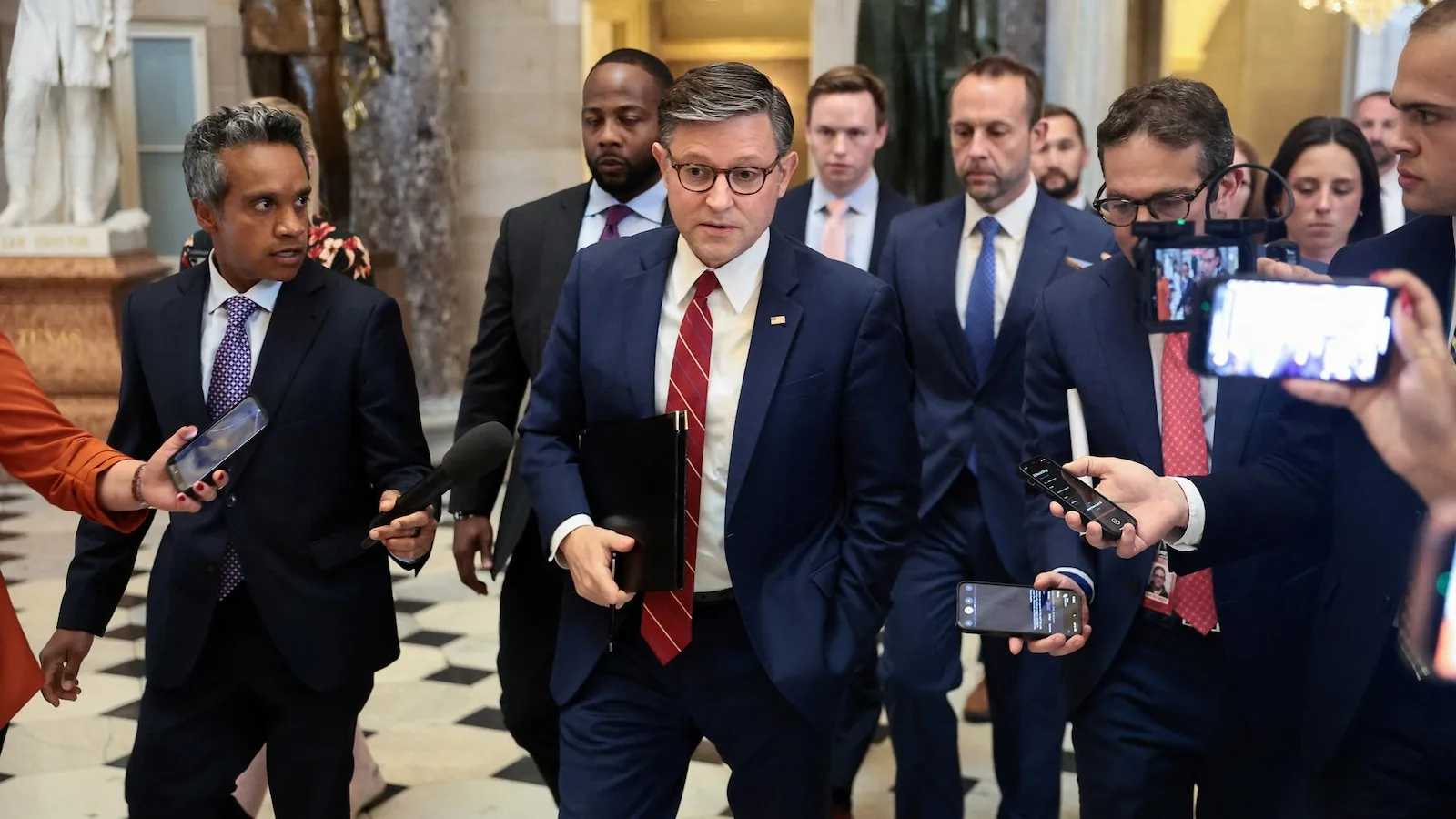
Speaker Mike Johnson secured the votes needed to clear the House by promising conservative holdouts a floor vote on legislation codifying President Trump's border policies, and he said that vote would take place before July 4. Johnson applauded the package's passage in a statement, saying, "With today’s vote, House and Senate Republicans have officially ended the third Democrat government shutdown of this Congress. And here’s the end result of Democrats’ record-setting obstruction: CBP and ICE will now be funded for the remainder of President Trump's term and Democrats will have no ability to defund these agencies in the 119th or 120th Congresses."
Lawmakers in both parties said the move to fund ICE and Border Patrol through the reconciliation process did little to reduce the chances of another federal funding lapse, and Washington Sen. Patty Murray, the Senate's top Democratic appropriator, said, "It's not helpful for sure. It makes it very difficult for us moving forward."
Sen. Lisa Murkowski, a senior appropriator, said removing the need to fund ICE and Border Patrol through the regular appropriations process "takes care of that," but added, "But how many other accounts do we have that we could have another kerfuffle?" Murkowski voted against the reconciliation bill last week and was the only Senate Republican to do so.
It is widely accepted on Capitol Hill that Congress will pass a stopgap funding bill to keep cash flowing for federal agencies past the midterms, and Rep. Steve Womack, who oversees annual transportation and housing spending, predicted this week that Congress will be crafting a funding patch come September. "I just hope we're not seriously talking about a potential shutdown again," he said.
Some lawmakers warned Democrats could try to use the dozen annual government funding bills as leverage to demand policy changes and funding cuts at ICE and Border Patrol. Rep. Lois Frankel, a member of the Appropriations Committee, said, "I can tell you this: We're going to try every which way to unfund these agencies." Democrats had for months been demanding guardrails on the president's immigration enforcement activities after federal agents shot and killed two U.S. citizens in Minnesota in January.
After Rep. Andy Harris proposed funding other controversial agencies through party-line reconciliation bills, House Appropriations Chair Tom Cole rejected the idea and told reporters, "We're not doing that. I will just tell you flat out, that will not happen." Cole also said he did not view the immigration enforcement package as a precedent, saying, "I don't think it's a precedent."