
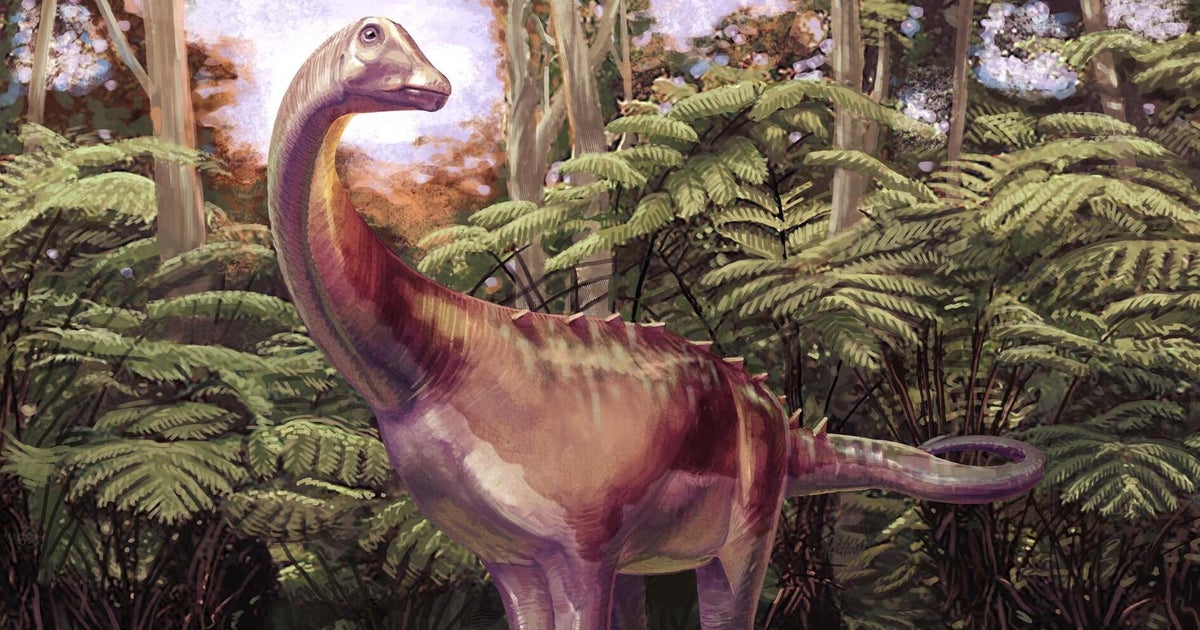
Scientists identified a dinosaur tail bone in a museum drawer as the first dinosaur bone collected from Antarctica.
The bone comes from the tail of a long-necked, plant-eating dinosaur called a titanosaur, and researchers have not yet identified the species it belongs to.
Geologist Mike Thomson collected the specimen in 1985 during an expedition to James Ross Island while mapping rock layers and gathering marine reptile fossils for future dating; he recorded the find as a large reptile.
Decades later paleontologist Mark Evans spotted the bone in the British Antarctic Survey's collections and examined it for a possible dinosaur identification.
"It's only when you start thinking 'what's in this drawer,' that sometimes you come across something and you think, 'Ah, this looks interesting,'" Evans said.
Evans and other researchers analyzed the bone's shape and compared it with more complete dinosaur remains, confirming it belonged to a titanosaur, and the findings were published Monday in the journal Acta Palaeontologica Polonica.
Thomson died in 2020 before the fossil was identified; "If he were still with us, he would be delighted to know what this was," Evans, a study co-author, said.
At about 23 feet long, the dinosaur was small for its group and may have been young when it died, and scientists think its body floated away from the coast and sank to the sea floor, becoming fossilized in marine rock.
Dinosaur fossils are rare in Antarctica because of the ice caps, but millions of years ago the region had lush forests and was "a rather different and much more hospitable place than we think of today," said study co-author Paul Barrett with the Natural History Museum in London.
More than 100 species of titanosaur have been identified worldwide; all were four-legged plant eaters with very long necks that helped them reach into trees, and the largest reached more than 115 feet and weighed about 60 tons.
Advances in technology now allow researchers to peer inside bones and gain more detailed information about ancient creatures.